From the Classroom to the Community: UC Chile Students Launch Health and Education Initiatives in Indonesia
Over the summer, students from UC Chile participated in a new edition of the Pallqa Cooperation and Leadership mobility program, implementing projects that combined academic learning with local impact. Despite being thousands of miles apart and coming from diverse cultural backgrounds, Pablo Fernández and Francisca Martínez shared a common goal: to contribute to communities while strengthening their knowledge and skills through hands-on experience.
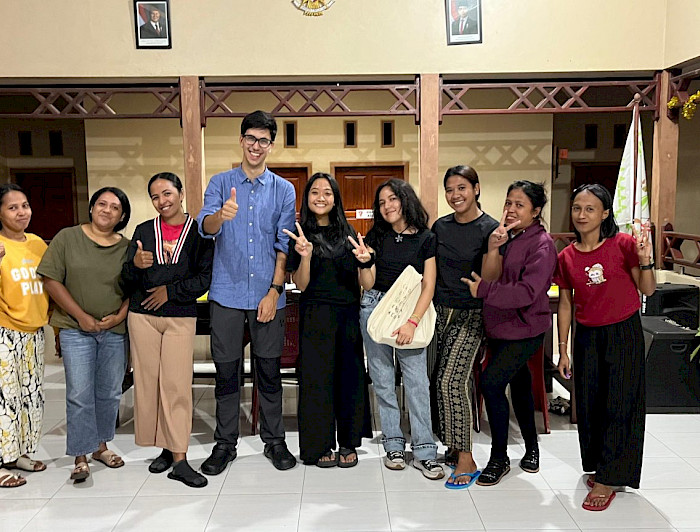
photo_camera Students applied to these programs in August 2025. (Photo credit: Participants of the mobility program)
The students participated in the Pallqa Cooperation and Leadership Program in Indonesia, an initiative organized by the Global Mobility Office within the UC Chile Office of the Vice President for International Affairs in collaboration with organizations from around the world. This experience allowed them to immerse themselves in an environment shaped by cultural diversity and the unique challenges of regional development in the Maluku Islands.
Their work was carried out in conjunction with the NGO Pohon Sagoe Maluku, an organization that has been collaborating with UC Chile since 2021 in the implementation of projects aimed at local development. Such an alliance has made it possible to promote initiatives designed to improve the quality of life of communities, through concrete and sustainable solutions.
Among them, the project "Drinking Water System in Wansar" stands out as one of the most emblematic milestones of this collaboration, reflecting the impact of joint work and the sustained commitment between both institutions.
Indonesia: A Testimony of International Collaboration for Local Development
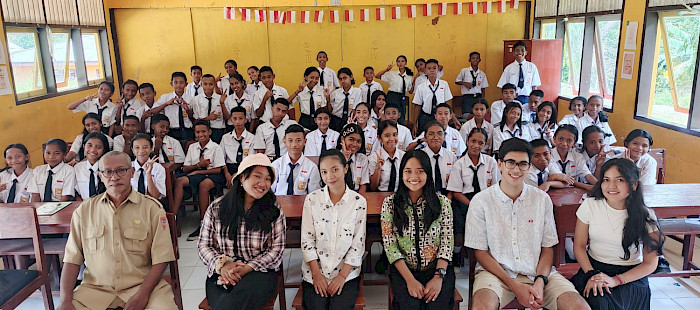
The students departed from Chile on January 4th and, after three stopovers in São Paulo, Istanbul, and Jakarta, they arrived at Ambon on January 7th. From there, they set out on a one-hour drive through the island’s tropical hills, finally arriving at the community of Ema.
“The people of Maluku were very welcoming and friendly to us. They felt very grateful and surprised that foreigners had come from a country that few here know.” – Those were the first impressions of Pablo Fernández, a UC Chile Medical student, when he arrived in Ema, Indonesia.
Welcoming visitors with music, dance, and traditions that showcase their warm hospitality is a cornerstone of local culture. In previous years of the Pallqa program, communities organized celebrations and shared their traditions as a welcome gesture once they knew that UC Chile students were coming, and this time was no exception.
“As soon as we arrived, they presented us with a piece of traditional clothing and introduced us to the community. They gave us an incredible welcome, filled with food, smiles, and meetings to ensure that we were all aligned regarding the community’s needs, our capabilities, and the project’s vision,” said Francisca Martínez, a UC Chile English Pedagogy student.
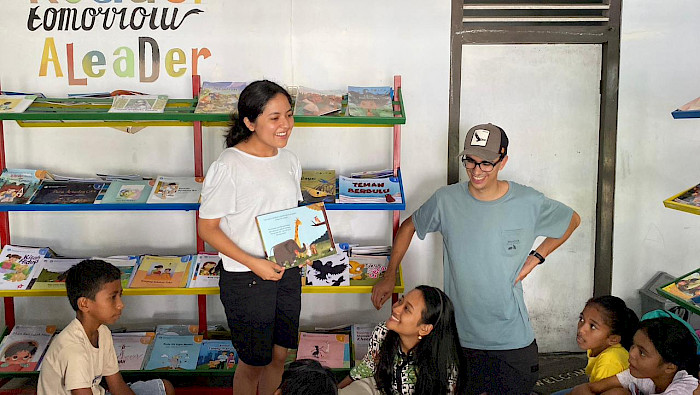
During the first days, the students met their host families, community leaders, and volunteers from Pohon Sagoe. Over the following days, they started working on projects that would contribute to the development of Negeri Ema (Ema Village) by providing tools to local volunteers and professionals from the education and health sectors.
Pablo and Francisca explain the main areas of work:
- Health: Conducting preventive check-ups for adults and children, delivering health education, and training in first aid and other relevant topics.
- Education: Teaching English, training teachers, and promoting study sessions in the afternoons, as well as offering extra-curricular classes.
- Sustainability: All these initiatives are carried out in collaboration with local volunteers, with the goal of integrating them into the process and helping them learn from it, thereby ensuring the program’s long-term sustainability.
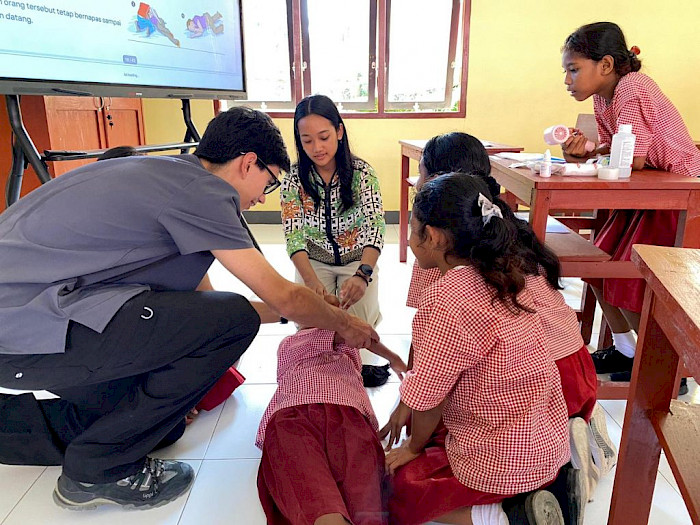
The first group of UC Chile students arrived in Indonesia in the summer of 2023 through the Pallqa program, a tradition that has continued ever since; Pablo and Francisca are part of the fourth cohort (Photo credit: Courtesy of the students)
For almost two months, the students successfully achieved the goals they had set in collaboration with the Ema community and the relevant authorities. They shared their knowledge and experience by contributing to health drives and classes in primary and secondary schools.
The students returned to Chile from Ambon on February 26th. “It has also taught me how to apply theoretical knowledge to real-world situations, seeking creative solutions that apply to these contexts. This has helped me a lot to put into practice the medical knowledge I have been learning over the years, so that I can use it to help people,” Pablo concludes.
This experience strengthens students’ leadership skills, inspiring them to become ambassadors for international opportunities, and for the meaningful contributions Chile can make to the world. Upon their return, they will motivate their peers and launch initiatives based on the knowledge acquired while abroad.


