Chilean Teachers Conduct Advanced Astronomical Observations Alongside International Scientists at La Silla Observatory
Teachers from various schools northern Chile participated for the first time in the La Silla School of Observation —organized by ESO—, which is traditionally geared toward international postgraduate students. Using the PLATOSpec spectrograph—designed by the UC Chile Center of Astro-Engineering—, they were able to learn firsthand how scientific knowledge in astronomy is generated. This experience can now be brought into the classroom, promoting scientific vocations from an early age.
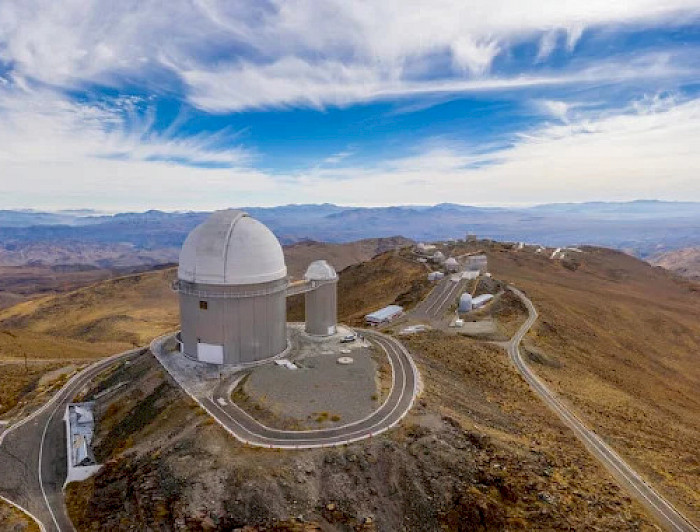
For the first time, teachers from schools in northern Chile joined the La Silla School of Observation —organized by the European Southern Observatory (ESO)—, an experience traditionally geared toward doctoral and master’s students from around the world.
This initiative, which took place from February 10 to 21 at La Silla Observatory in the Coquimbo Region, brought together a group of 20 international postgraduate students, who conducted advanced astronomical observations, data analysis, and scientific presentations.
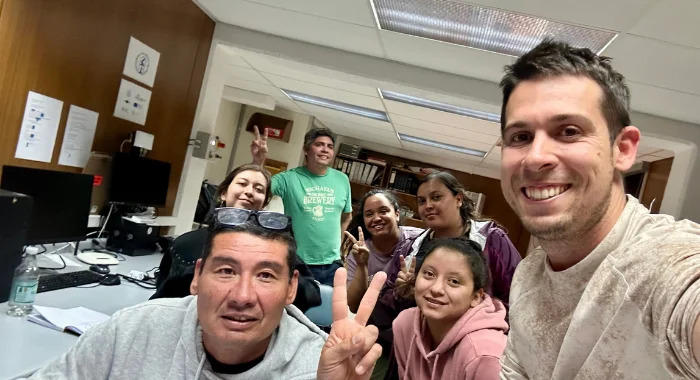
At the same time, eight teachers from schools of the Antofagasta, Atacama, and Coquimbo regions joined the program, participating actively in fieldwork and the full cycle of astronomical research.
Exoplanet research
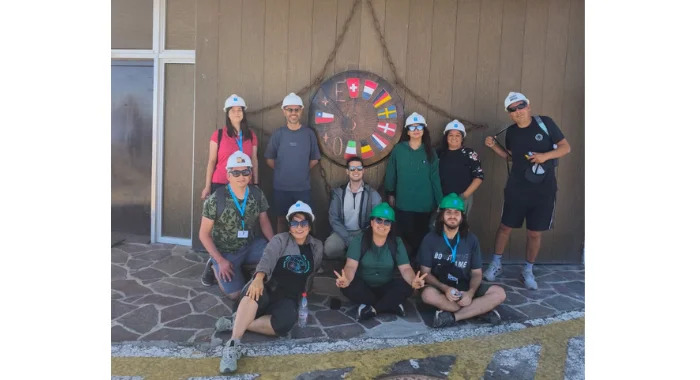
Among the participating teachers were representatives from Pedro Pablo Muñoz High School and José Santos Ossa School (La Higuera, Coquimbo region), Pedro Troncoso Machuca High School (Atacama, Atacama region), and Juan Cortés-Montoy Cortés High School (Taltal, Antofagasta region), who spent two weeks conducting observations, learning techniques for working at an observatory, and analyzing scientific data – knowledge they will later be able to bring into their classrooms.
One of the highlights of this experience was access to state-of-the-art equipment. The teachers worked with the PLATOSpec spectrograph, developed by the UC Chile Center for Astro-Engineering in collaboration with European institutions, a tool that recently celebrated its first year of operation on the ESO 1.25-meter telescope at La Silla observatory. This system has made it possible to study exoplanets around nearly a thousand stars, establishing itself as an important tool in contemporary observational astronomy. As part of this program, the international PLATOSpec consortium—composed of teams from Chile, Germany, and the Czech Republic—provided four half-nights of exclusive observation time for the teachers, who used both the instrument’s camera as well as its spectrograph. ESO praised this support, thanking the consortium and the Chilean astronomers for their participation.
Astronomy in schools
For astronomer Leonardo Vanzi, academic at the UC Chile Center for Astro-Engineering and one of the leaders of the PLATOSpec project, this type of initiative is strategically important for science education in the country. “In my opinion, it is extremely important that observatories not be perceived as something distant and disconnected from reality, so ESO’s initiative is excellent. On this occasion, moreover, having contributed Chilean technology is clearly a source of pride and joy for us,” he stated.
Beyond access to advanced instruments, this experience allowed teachers to learn firsthand how scientific knowledge in astronomy is generated, at one of the world’s leading observation hubs. With the data they collected and the tools they acquired, the participants returned to their communities with the goal of strengthening educational initiatives, such as school science academies and astronomical observation projects.
In a country that boasts some of the clearest skies in the world, these types of programs aim to bridge the gap between cutting-edge science and the school system, promoting scientific vocation from early age, and bringing astronomy into the classroom. The experience is also evidence of Chile’s growing role not only as host of major international observatories, but as a developer of state-of-the-art astronomical technology.


