CIELO: The project that brings Chile to the forefront of theoretical astrophysics
Directed from Chile and led by Patricia Tissera, professor from UC Chile Institute of Astrophysics and director of CATA, the CIELO project opens new frontiers in the understanding of the evolution of galaxies, and positions Chile as a leading figure in computational astrophysics from the Southern Cone
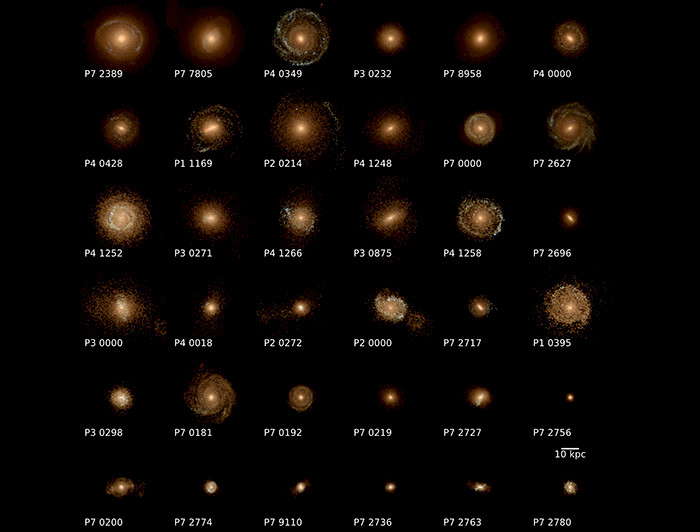
photo_camera As Patricia Tissera —UC Chile professor and director of CATA— states, “CIELO is the first simulation project of this kind developed in Chile and the region.” (Image: Selection of galaxies/CIELO project).
Understanding how galaxies form and evolve within their natural environment –the cosmic web– considering their chemical properties as traces of their evolution— is the goal of CIELO (Chemo-dynamIcal propertiEs of gaLaxies and the cOsmic web project). This initiative, led by Patricia Tissera, professor from the UC Chile Institute of Astrophysics and director and principal researcher from the Center of Excellence in Astrophysics and Related Technologies (CATA, as per its Spanish acronym), represents a milestone in the study of the evolution of galaxies in the cosmos.
This initiative seeks to shed light on how different environments (void, filaments, cosmic walls) impact the dynamics and composition of galaxies, providing new insights into their formation and transformation through time.
“CIELO is the first project of simulations of this kind developed in Chile and the Region,” asserts Doctor Tissera. “Thanks to this initiative, today the national scientific community can pose and address its own questions about the universe from an independent, rigorous, and locally-influenced perspective.”
This effort not only marks a turning point in the theoretical astrophysics developed in Latin America but also positions Chile as a global reference point in the field of cosmological simulation.
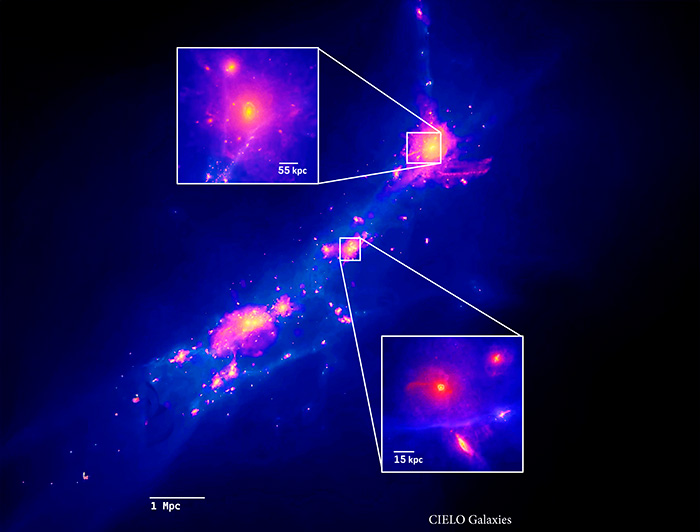
This project has been under development for over eight years through collaborations with Ibero-American institutions and international centers, such as the Autonomous University of Madrid. It has also been promoted by the LACEGAL Network, with the participation of the Max Planck Institute for Astrophysics in Münich, Germany, and the Institute for Computational Cosmology from Durham University, England, —funded by the European Union— which has strengthened numerical astrophysics in Latin America. which has strengthened numerical astrophysics in Latin America.
In addition to generating cutting-edge knowledge, CIELO has been a driving force in the training of highly qualified human capital: seven postgraduate theses within its framework and more than ten undergraduate research projects are being carried out, all associated with the EVOGALD4D group from the UC Chile Institute of Astrophysics.
A tool for the present and for the future
The CIELO project results are designed to complement and enrich the interpretation of data obtained from telescopes like the James Webb Space Telescope (JWST), the Vera C. Rubin Observatory, and the forthcoming Extremely Large Telescope (ELT).
CIELO’s innovative approach to the analysis of galaxies in low density environments allows the study of processes that have been little explored until now, with special attention to chemical elements as indicators of their evolutionary history. This approach has made it possible, for example, to actively collaborate with the CRISTAL survey, part of CATA, and with initiatives such as PhyloGal, which applies concepts from phylogenetics to the study of galaxies.
This project consolidates Chile’s capacity to lead cutting-edge research and places the Center of Excellence in Astrophysics and Related Technologies (CATA) as a platform that supports the development of computational astrophysics in the Southern Hemisphere.
Review the research “The CIELO project: The chemo-dynamical properties of galaxies and the cosmic web”
The strategic role of CATA
The Center of Excellence in Astrophysics and Related Technologies (CATA) has played an important role in the development of the project, facilitating access to high performance computational infrastructure (Geryon), essential for complex cosmological simulations, along with providing resources for the work carried out by master’s and PhD students.
“Thanks to CATA we can access resources such as the Geryon cluster, a key element in the development of high scale simulations in Chile, as well as continuous support in disseminating our scientific advances,” explains Doctor Tissera.
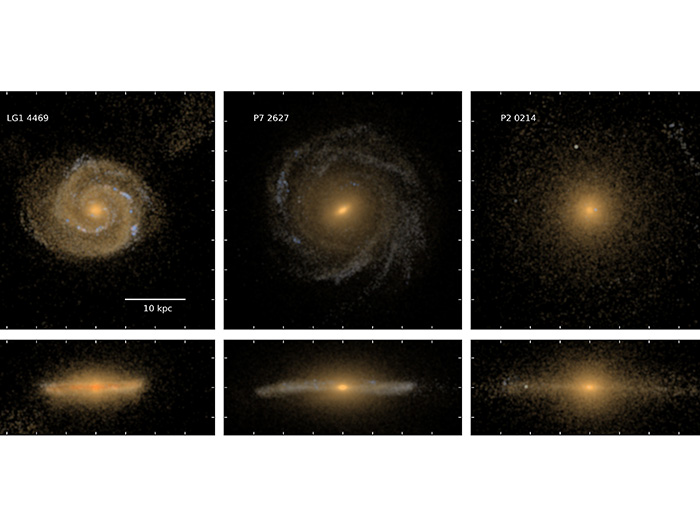
Simulations were also run at the National Laboratory for High Performance Computing (NLHPC), from the Center for Mathematical Modeling (CMM) and the Barcelona Supercomputing Center. The use of tools such as GADGET-3, adapted with models of star formation, chemical cooling and supernova feedback, with software like SKIRT for synthetic pictures and proprietary codes, has made it possible to analyze the evolution of galaxies in great detail.
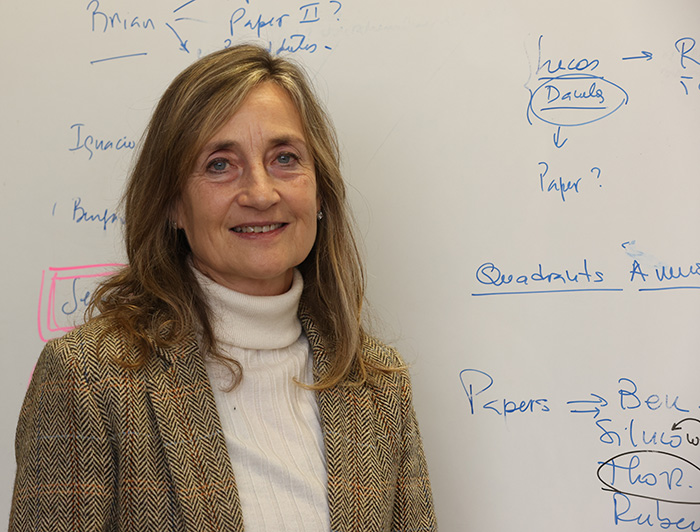
“CIELO constructs virtual universes inside the supercomputers, true Cosmic Virtual Twins, that allow us to travel from the Milky Way to the first galaxies of our universe. This ability opens possibilities even beyond astronomy, in fields where simulations and modeling are key,” adds Tissera.
Through initiatives like this, CATA, along with the Institute of Astrophysics and other institutions, contributes to the scope of astronomic knowledge, the formation of new generations of scientists, and the strengthening of technological capabilities that allow to observe and understand the universe from Chile with its own unique perspective and global impact.


