Future UC Chile Engineer Travels to the United States for Space Mission Landing Training
Matilde Gaete will participate in this stage of preparation for orbital flight, which includes ocean survival tests in case of contingencies during the astronauts’ descent to Earth
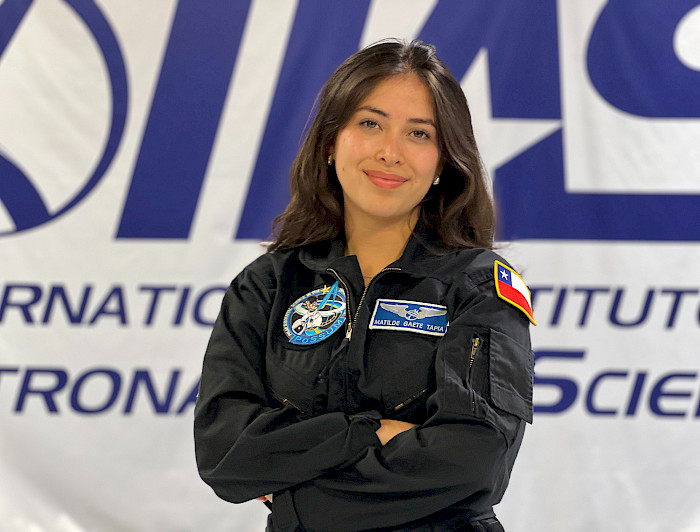
photo_camera The UC Chile student will take part in this first professional training course on the landing phase of manned space missions
Matilde Gaete, an engineering student at UC Chile, travelled to the United States on Wednesday, October 15, to participate in the first professional training course on the landing phase of manned space missions.
This program, which will take place in Groton, Connecticut, combines theoretical instruction and practical training in contingency scenarios. It includes real-world testing at sea with a full-scale NASA capsule, among other challenges.
“This program involves a lot of systems engineering and is essential for an orbital mission, because it covers all post-landing emergency operations. In the end, it’s something that all space missions have,” noted the UC Chile engineering student.
Gaete, who is the first Chilean to attend this program, added that this course combines technical requirements and teamwork: “In a mission, each group has clearly defined roles, but everyone must know the survival protocols.”
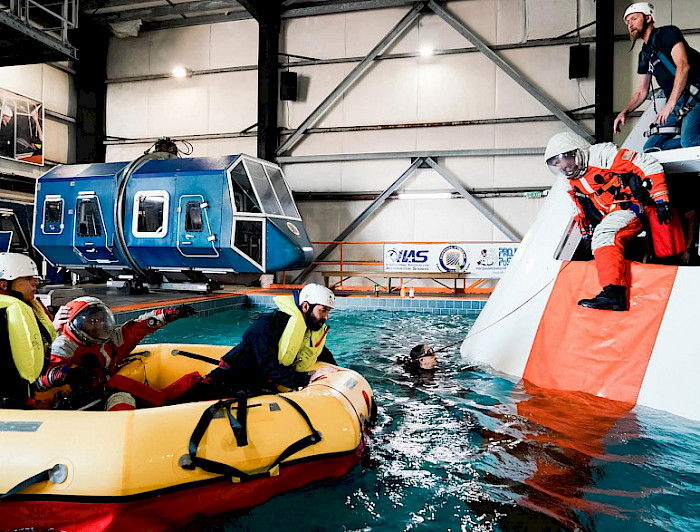
Gaete mentioned that the practical component will take place both in a pool and in the open sea. “The survival training is conducted in the ocean, on the beach, and also in a pool, where we will use a replica of a space capsule.”
“As for the physical and mental components of the training, I feel prepared and calm. I try to be aware of the factors at stake and of what I need to do in each scenario, because if you get nervous, it’s worse,” mentioned the Chilean astronaut-in-training.
Matilde also points out that the theoretical part of the systems engineering course has helped her understand the challenges faced by space crews on real missions. “I’ve learned how to organize capsule exit protocols, because you have to know how to act quickly and accurately,” she said.
During training, Matilde will work with a full-scale size model of NASA’s Orion spacecraft, used in the Artemis missions (https://youtu.be/hYOxpnnUixU). This model was designed to teach procedures for lateral and top exit procedures, for example.
With a career trajectory marked by her interest in space exploration from an early age, Matilde has been part of the International Institute of Astronautical Sciences, where she completed her first stage of training in Florida. She has also previously participated in programs offered by NASA and the Chilean Air Force.
“I am very excited to continue learning in this field. Each program brings me closer to my goal of contributing as a Chilean to space exploration through engineering, and also of inspiring other young people to take an interest in science and technology,” the UC Chile student concluded.


