The UC Chile Friends International Foundation Joins the Effort to Transform Chile during Its Annual Visit
The Board of Directors of the Friends UC Foundation, an American non-profit corporation that has contributed to the work of the University for more than three decades, visited UC Chile for four days, learning about cutting-edge projects promoted by academics and university centers that promote creation, innovation, and research. They also awarded scholarships and prizes to outstanding students, as well as English-language training.
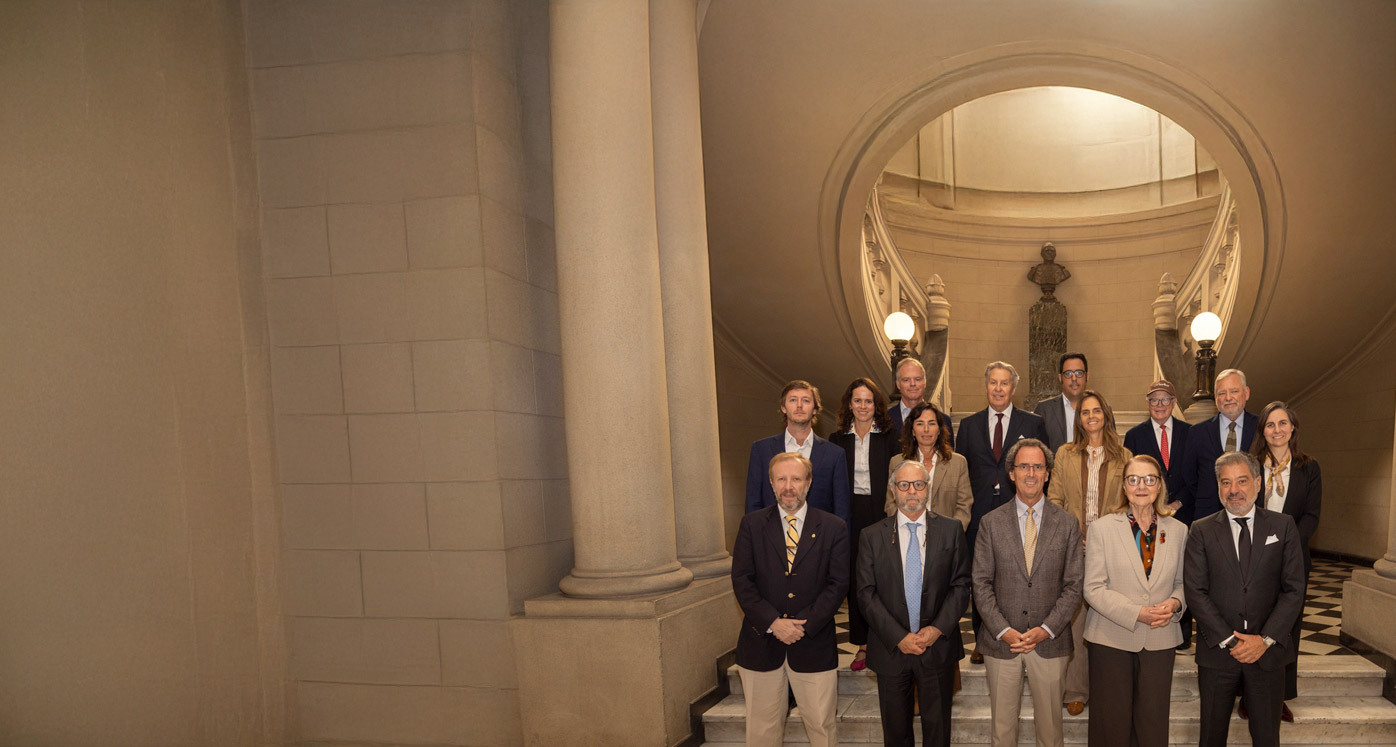
photo_camera Representatives from the UC Chile Friends Board of Directors paid their annual visit to the University, where they learned about the 2026–2030 Strategic Plan, as well as initiatives and projects in the areas of research, creation, and innovation. (Photo credit: César Dellepiane)
Promoting higher education in Chile by supporting UC Chile is what inspires Friends UC, a non-profit corporation created in the United States.
The organization, based in New York, is made up of Chilean and American directors, who come from very diverse disciplines and geographical areas, united by their ties to the University. They have their own scholarship programs, and contribute to different UC Chile projects in various fields, including research and public engagement.
Between April 11th and 14th, representatives of the Board of Directors of UC Chile Friends met in Santiago to participate in a series of activities within the framework of their annual meeting. The event was attended by Mario Valdivia, President of the Board of directors of the foundation; Sava Thomas, President Emerita; Alejandra Valenzuela, Executive Coordinator of UC Chile Friends; and the new members of the foundation: Roberto Awad, Sebastián Valenzuela, Carolina Eterovic, Patricio Donoso, Matias Rivera, Roger Thomas, Edgard Lampert, Alejandra Elgueta, Andrés Echeverría, Tulio Vera, and Enrique Jocelyn Holt, alongside other attendees.
The delegation was welcomed by UC Chile President Juan Carlos de la Llera; Francisco Gallego, Provost for Institutional Management; Maria Montt, Vice President for International Affairs; and Eduardo Arriagada, Vice President for Communications, among other university authorities, who participated in the various events of the visit.
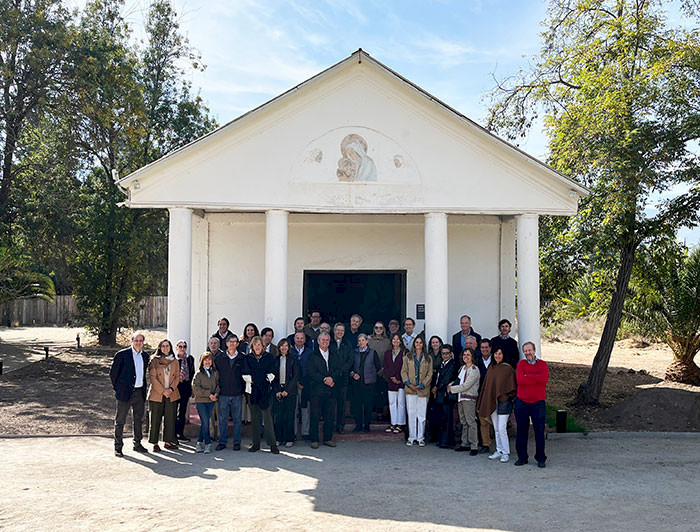
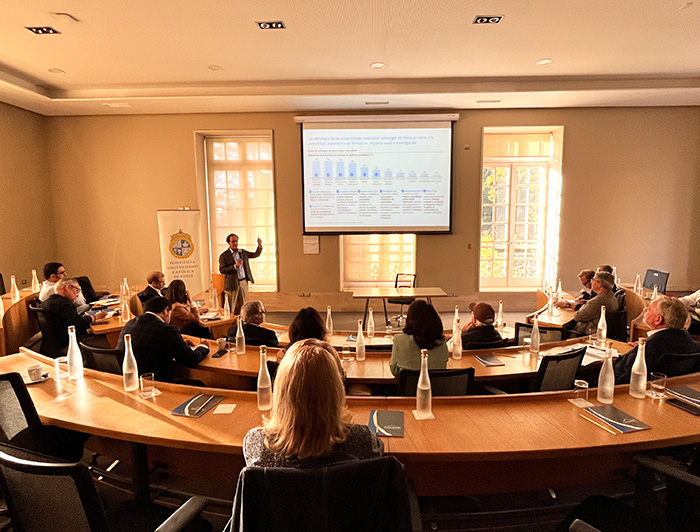
The first day began at the Majadas de Pirque Convention Center—a historic heritage building dating from the early 1900s, where UC Chile President de la Llera presented the 2026–2030 Strategic Plan alongside the steering committee.
A Chilean Mass and Art of Indigenous Peoples
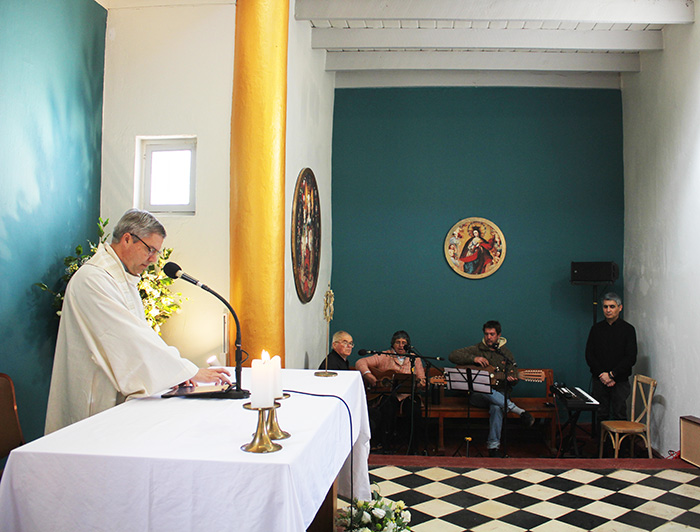
On Sunday, the delegation participated in a traditional “Chilean Mass” officiated by Vice Chancellor Priest Osvaldo Fernández de Castro, at the Pirque Convention Center. Mayor Jaime Escudero Ramos also participated, along with residents of the district.
“This instance is so important. Just imagine that this art has been around longer than the nation itself; we have been carrying on this tradition for over 400 years. And we must hand down this art to future generations, intact,” said the folk singer Juan Domingo Pérez Ibarra, recognized in 2018 as a Living Human Treasure of Chile, who sang during the Mass.
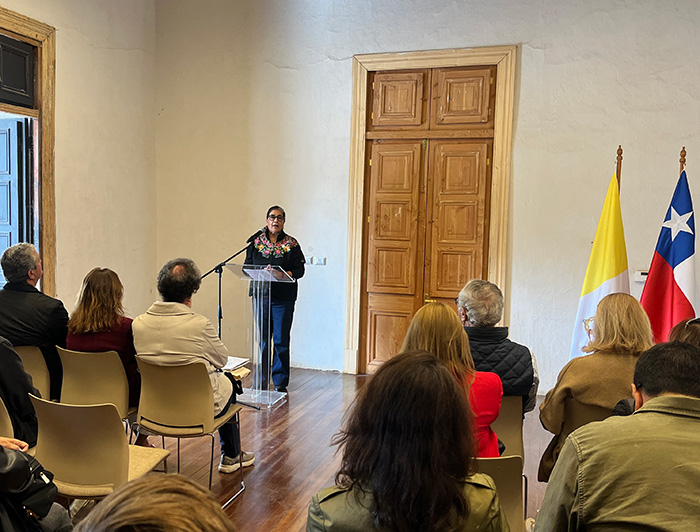
The visitors also attended the opening of a pre-Columbian art exhibition at the center’s gallery: “Art of the First Nations and Its Materiality.” This features art pieces from indigenous peoples and was curated by Margarita Alvarado, a professor from the UC Chile Institute of Aesthetics.
‘‘The key is to invite them not only to this grand 19th-century historic building, which is so important to our history, but also to the Handicrafts Exhibition at Campus Oriente, as these spaces will help them learn about cultural expressions that were not recognized as art for a long time. This will help them to understand how these peoples had their own sensitivities, ways of living, perceiving, and conceiving the world through a symbolic and cultural aesthetic.” said Professor Alvarado.
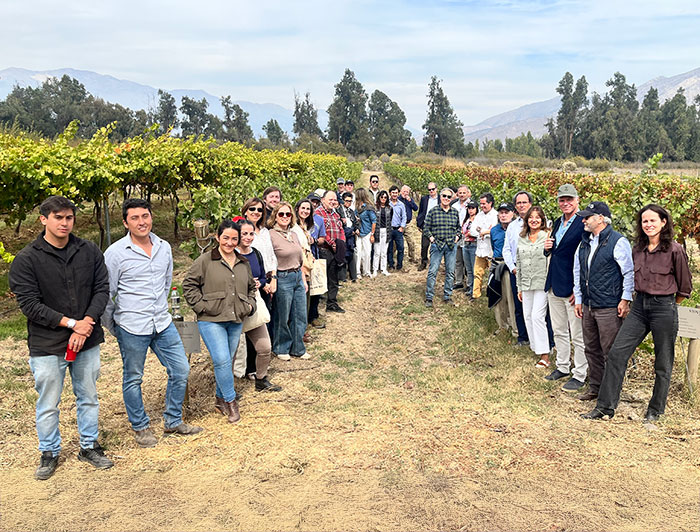
The attendees then visited the Pirque Experimental Station (EEP), where they were welcomed by the Dean of the Faculty of Agronomy and Natural Systems, Alejandra Engler. The center conducts significant agricultural research, featuring a dairy farm, pastures, fruit trees, and irrigation technology, and is renowned for its pioneering studies in regenerative livestock farming and sustainable agriculture.
Chile and Its Future: Challenges and Projections
There was also a discussion panel titled “Chile and Its Future: Challenges and Projections,” featuring Father José Yuraszeck Krebs, S.J., General Chaplain of Hogar de Cristo; Claudia Pizarro, Mayor of La Pintana; Loreto Seguel, Executive President of the Salmon Council and former Minister of Women and Gender Equality; Andrés Echeverría, partner at Frontal Trust; and Rafael Sagredo, scholar at the UC Chile Institute of History and recipient of the National History Award (2022), who served as moderator.
Sagredo began the event by acknowledging that we are living in times of “turmoil” but, at the same time, “spectacular and full of hope,” encouraging attendees to analyze the current situation with a broad perspective based on the panelists’ experiences. The professor added that the guests’ perspectives “can help us reflect about Chile and transform it—in line with our university mission—into a society marked by greater justice, solidarity, and efficiency.”
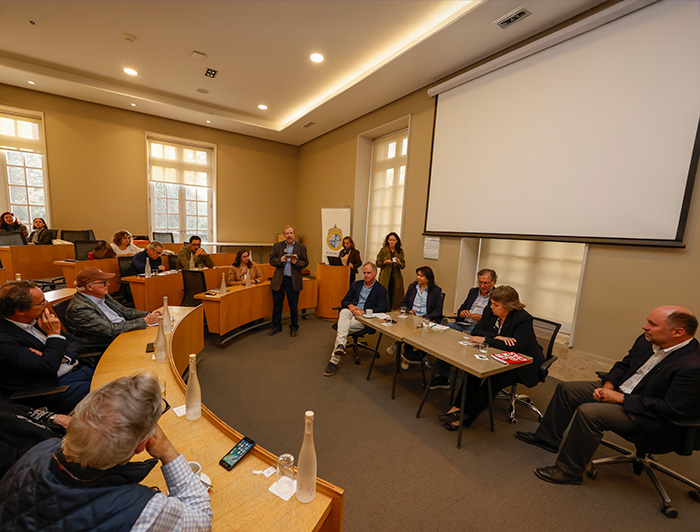
The moderator asked each panelist to choose from a list of words—different for each person—the one that best reflected the challenges or significant contributions they envision for Chile. In this context, Claudia Pizarro highlighted the role of the community. “One is in the position of mayor because it is a vehicle for change. From that perspective, I can start making a difference in my community,” she added.
Andrés Echeverría, meanwhile, emphasized the importance of development. Quoting the latest Criteria survey, the executive noted that “across the board, the population is once again viewing economic growth as a key issue… I am hopeful that the concept of well-managed growth is once again in the spotlight.”
Loreto Seguel addressed the issue of Santiago and the regions. “When it comes to developing our country, we must do so for everyone; and we must accomplish this in Santiago, in the different regions, taking into account the diversity and perspectives of all,” he said.
Father José Yuraszeck also highlighted the concept of loneliness, noting that “today, poverty in Chile wears the face of elderly individuals, who are alone. And this has been a consequence of Chile’s success, by Chile’s development,” he said. “Today, people live much longer, but they are alone,’’ he added.
Getting to Know Life at University
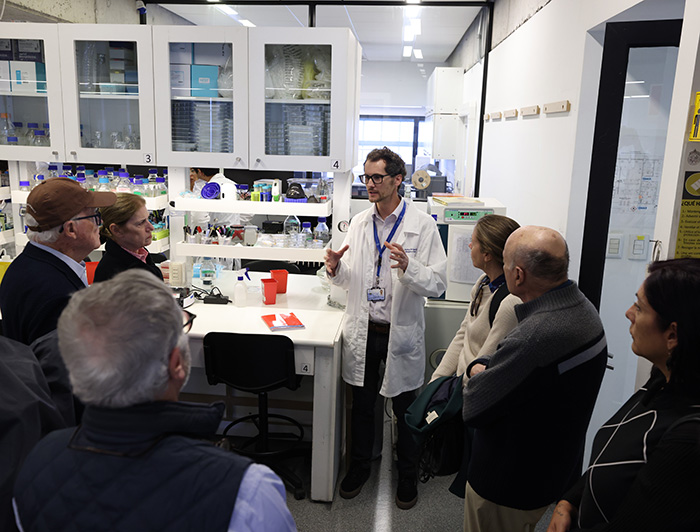
On the third day of their visit, the UC Chile Friends delegation continued their itinerary with a visit to the San Joaquín campus, where they explored various facilities and laboratories and learned about some of the latest research projects led by the university’s faculty members.
Next, during the presentation titled “UC Chile at the Forefront: Creation, Innovation, and Research,” academics from different disciplines shared their current projects and their visions for UC Chile’s future in areas such as science, society, culture, and technological development.
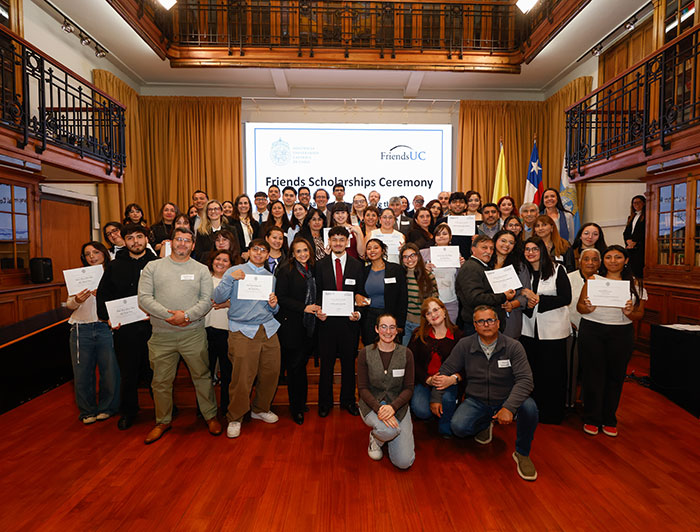
The visit concluded with the “UC Chile Friends Scholarships” award ceremony, in which students were recognized as beneficiaries of the Cristóbal Conde Scholarship—which aims to provide financial support to talented students facing financial hardship—and the Leading the Way program—which offers intensive English language training to undergraduate students from underprivileged backgrounds.
This year’s Eulalia Donoso Medina Award, which recognizes students who have shown great determination and commitment, was given to the law student Catalina Salinas Sepúlveda. The event also celebrated the establishment of the Leading the Way Fellowship Circle, a community of former program fellows who come together to strengthen their networks, leadership skills, and long-term impact.
“UC Chile Friends and UC Chile share a common purpose: to contribute to Chile’s development through education, knowledge, and public service. This is not just a collaborative partnership; it is also a committed community working toward a shared goal, where every effort helps make the dream of improving our country a reality. And it is precisely through this collaboration that we can make an impact that goes far beyond the classroom,” concludes Mario Valdivia, president of UC Chile Friends.