UC Chile Promotes Alliance with Canadian Universities to Protect Oceans through Innovation
Representatives from the Pacific Marine Science Alliance (PMSA), which brings together five Canadian universities to promote research, education, and innovation in marine sciences, visited UC Chile to identify opportunities for collaboration and outline joint projects. They also toured the UC Chile Coastal Marine Research Station at Las Cruces, and learned about the research that takes place there.
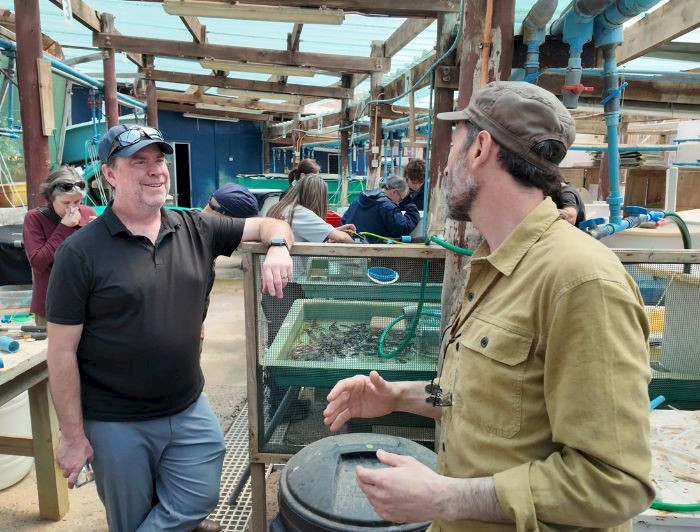
photo_camera At the Las Cruces station, the delegation toured the facilities, learned about the research being conducted there, and shared their own projects.
The problems affecting the world’s oceans are not confined to a single region. To address this global challenge, countries need to work collaboratively rather than looking for solutions in isolation. In line with this, UC Chile is promoting new alliances with this focus. Recently, a delegation from the Pacific Marine Science Alliance (PMSA), an alliance of five Canadian universities, visited Casa Central and the UC Chile Coastal Marine Research Station (UC Chile ECIM, as per its initials in Spanish) at Las Cruces. A representative from Laval University also participated, expanding the link to Canada’s east coast.
PMSA is an association of the Universities of Alberta, Calgary, Victoria, Simon Fraser, and British Columbia, dedicated to promoting research, education, and innovation in marine sciences.
As a first step in a joint agenda, universities from both countries defined new exchange opportunities for students and established a roadmap for collaborative projects in key areas such as biogeochemistry, physical oceanography, observation and modelling systems, ecology, evolution, and geophysics.
Las Cruces and Casa Central: Field science as a bridge between countries
The first day took place on Sunday, November 9th at UC Chile ECIM, which is part of the UC Chile Network of Regional Centers and Stations, UC Chile RCER (as per its initials in Spanish.) At the Las Cruces station, the delegation toured the facilities, learned about the research being conducted there, and shared their own projects.
Sylvain Faugeron, Director of UC Chile ECIM, highlighted the potential of the alliance: “It contributes to the strengthening of ocean science because we have comparable ecosystems that allow us to study similar processes. And it also opens up new opportunities for both researchers and students.”
Sergio Guitart, Coordinator of UC Chile RCER, emphasized the strategic role of these stations in the collaborations: “UC Chile can provide their Network of Regional Centers and Stations, offering space to develop research in the territory, which is one of the interests of this delegation.”
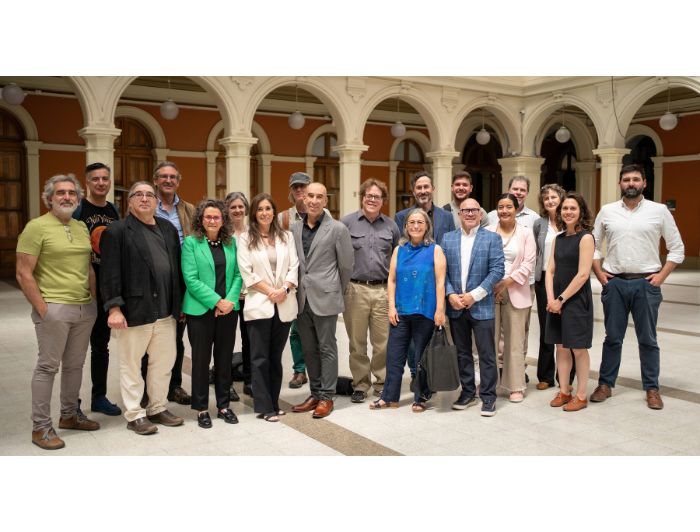
On Tuesday, November 11th, the delegation arrived at Casa Central for an extended working session with UC Chile academics. During the meeting, opportunities for collaboration were identified and joint projects were outlined. UC Chile Vice President for Research María Angélica Fellenberg participated in this event and highlighted the strategic significance of these alliances: “We are aligning our research with the national priorities and the needs of society, a vision that also guides our international collaborations. This alliance demonstrates how universities can work together to generate global impact.”
A shared ocean: Science without borders
From Canada, representatives of PMSA agreed on the importance of advancing collaborative networks. Philippe Tortell, academic from the University of British Columbia and leader of the delegation, stressed the global dimension of these challenges: “The oceanic problems we face are not limited to a single region or a single country. By working together, we can undertake even larger projects and gain a broader global perspective on issues that affect multiple countries.”
Sean Rogers, Director of the Bamfield Marine Sciences Centre, noted that collaborations like these embody the belief that the planet shares a single ocean, a key idea of the 2025 One Ocean Congress. “One Ocean Science requires countries to work in collaboration. We cannot address these challenges nor find solutions separately. We have to do it together.” he mentioned.
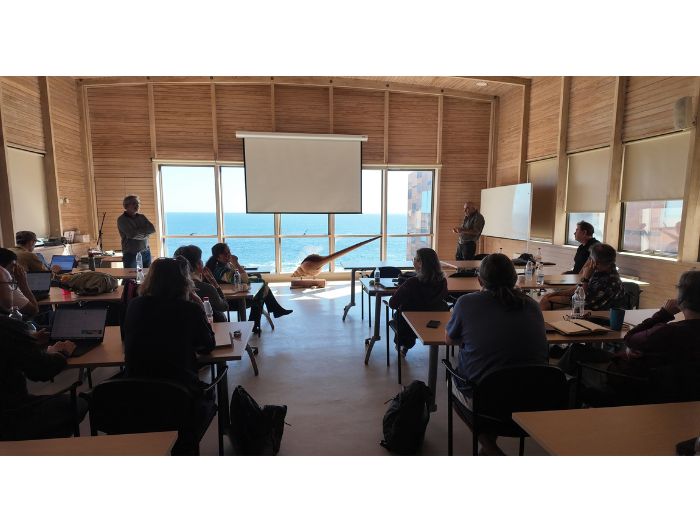
The delegation also included government representatives. Angélica Peña, from Fisheries and Oceans Canada, the Canadian government organization responsible for safeguarding waters and managing marine resources and fishing, recalled the importance of linking science and public policy: “Governments have the duty to protect aquatic resources, so they need the information provided by the scientific community to know what is happening in the ocean, how it is changing, how to protect these resources, and how to manage them sustainably.”
Partnership between Canada and the new National Consortium for Marine Science
The bilateral work continued on Thursday the 13th and Friday the 14th of November in Concepción, at the International Workshop “Chile–Canada Ocean Research Collaboration,” organized by the Oceans Institute of the University of Concepción. Representatives of nine Chilean universities, including UC Chile, shared experiences and coordinated actions to consolidate the new National Consortium for Marine Science and its coordination with Canada’s PMSA.
This work took place at a key moment in the scientific relationship between the two countries: on November 25th, an agreement was signed between ANID and NSERC, research organizations in Chile and Canada, which opens up new opportunities.
The meetings held in Las Cruces, Santiago, and Concepción consolidate a message shared across the Pacific: collaboration is necessary to face the challenges of the present.


