
UC Chile Research Develops Technology to Improve Cancer Treatments Using Light and Microalgae
In experimental models, researchers have increased the effectiveness of radiotherapy by boosting oxygen levels within the tumor through microorganism photosynthesis when illuminated.
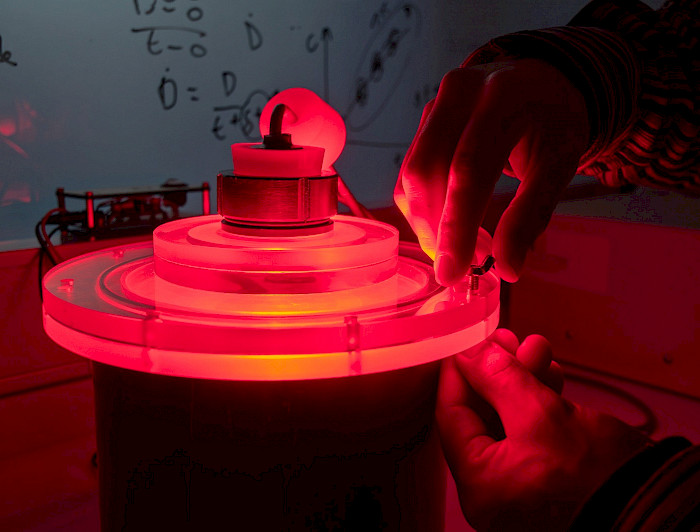
A lack of oxygen in a tumor can reduce the efficacy of treatments designed to destroy it. To address this problem, researchers from the UC Chile Institute of Physics are studying an alternative: using microalgae that, when exposed to light, produce oxygen through photosynthesis.
A lack of oxygen in a tumor can reduce the efficacy of treatments designed to destroy it. To address this problem, researchers from the UC Chile Institute of Physics are studying an alternative: using microalgae that, when exposed to light, produce oxygen through photosynthesis.
“The starting point of our research is a common problem that affects the efficiency of several therapies: the scarcity of oxygen in diseased tissues,” says Beatriz Sánchez, researcher at the UC Chile Institute of Physics.
In the XPHYBIO radiobiology laboratory and the BiOPI biophotonics laboratory at the Institute of Physics, researcher Sánchez, together with her colleagues Hilde Buzzá and Ignacio Espinoza, studies light for its ability to improve treatment responses against several diseases, most notably cancer. Their work focuses on radiotherapy and photodynamic therapy, whose efficacy can be limited when oxygen is scarce, a condition known as hypoxia.
In the most commonly used form of radiotherapy, photon beams damage the DNA of tumor cells through a mechanism that loses effectiveness in the absence of oxygen. To evaluate the contribution of microalgae, the team conducted experiments with breast cancer cells maintained under hypoxic conditions. When they irradiated them in the presence of illuminated microalgae, they eliminated a greater proportion of tumor cells than when they applied radiation without these microorganisms.
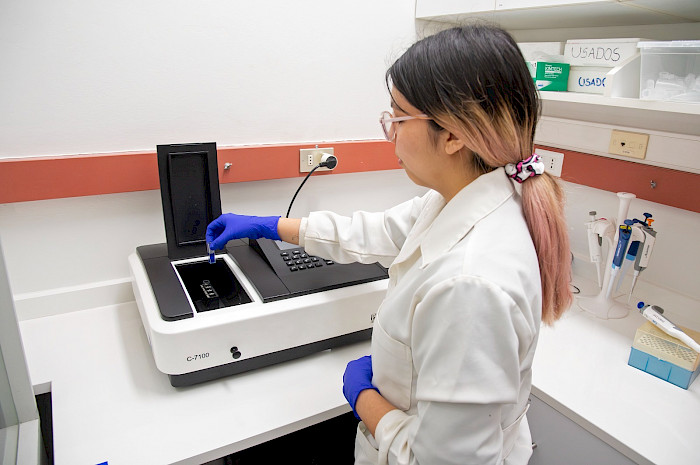
The species used is Chlamydomonas reinhardtii, which generates oxygen when exposed to light. With this microalga, researchers also seek to improve photodynamic therapy, which uses a photosensitizing drug. In this therapy, once activated by light, the drug reacts with oxygen and generates substances that can destroy tumor cells or infectious microorganisms.
In a study published in Photochemical & Photobiological Sciences, the team evaluated this combination on the vascularized membrane of a chicken embryo. With illuminated microalgae, they obtained an effect similar to that of the therapy without them, but at a dose ten times lower. This could make it possible to reduce costs and toxicity.
“Although the results obtained so far are promising, they remain preliminary,” says Sánchez. Before any eventual application in patients, it will be necessary to determine how to control the persistence of the microalgae in tissues and eliminate them once treatment is completed. Researchers are also studying how to make light act effectively at greater depths.
The microalga used is the same one employed by the 2026 Nobel Prize in Physiology or Medicine laureate for advances in optogenetics. This technique makes it possible to control neuronal activity using light-sensitive proteins.
One challenge posed by this research is how to illuminate the microalga deep inside tumors, where external light cannot reach. “While it requires further development, this could be achieved using radioluminescent nanoparticles, which emit light when irradiated,” says Sánchez. “In this way, alongside radiotherapy, these tiny particles can light up, triggering the photosynthesis that creates oxygen.”
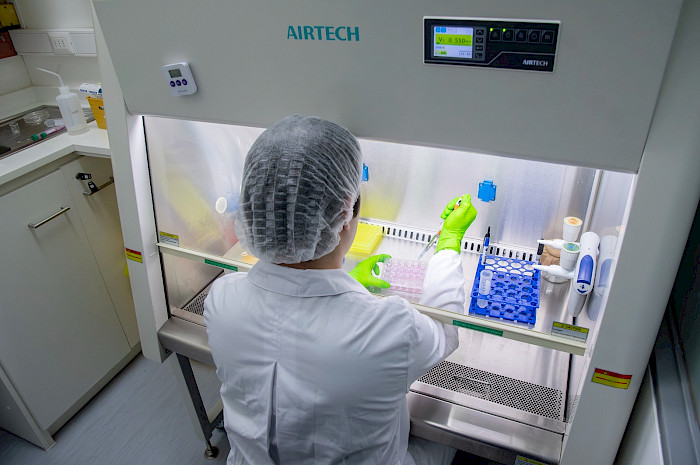
The research also extends to wounds infected by antibiotic-resistant bacteria. With funding from the National Agency for Research and Development (ANID, as per its initials in Spanish), both laboratories are studying the use of light, photosensitizing drugs, and photosynthetic microorganisms to combat these infections. Antimicrobial photodynamic therapy attacks bacteria through mechanisms different from those used by antibiotics.
In parallel, researchers are exploring other microorganisms that are even more efficient at generating oxygen, such as certain microalgae found in the depths of Chile’s seas.


