UC Chile Researchers Develop Five New Chilean Quinoa Varieties
Developed by researchers from the Faculty of Agricultural and Natural Systems, the new varieties aim to meet specific market needs, such as larger white grains and red and black varieties, expanding the diversity available to farmers and consumers.
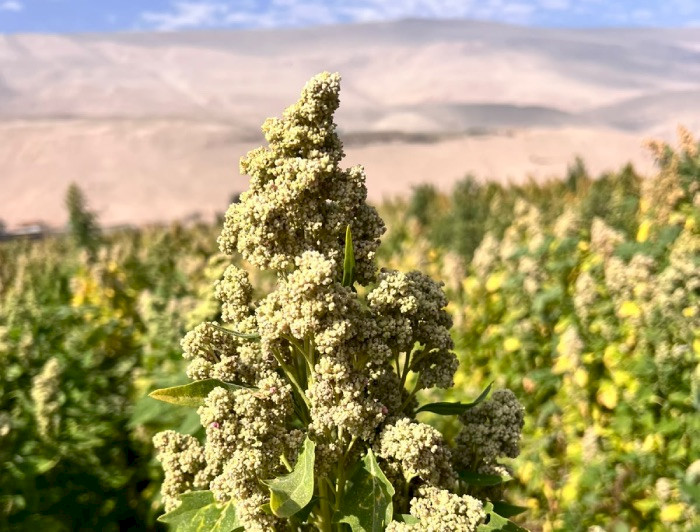
photo_camera Chucao, trauco, nieves, pangal, and pincoya are the names of the new national quinoa varieties. (Photo credit: QuinoaLab)
After more than ten years of research, five new quinoa varieties developed by the Faculty of Agricultural and Natural Systems have begun to show concrete results beyond laboratories and experimental fields. Agricultural producers are already using the varieties, exporting them to Europe and creating new commercial opportunities for Chile. The varieties were named with Chilean terms, referencing native species and traditions: chucao, trauco, nieves, pangal, and pincoya.
Faculty member Francisco Fuentes led the work, which began in 2015 through crossbreeding, genetic selection, and field validation. The goal was to develop varieties that met farmers' needs and aligned with national and international market trends.
One of the most significant milestones occurred in 2025, when the five varieties officially entered the Protected Varieties Register of the Agriculture and Livestock Service (SAG, as per its initials in Spanish), culminating an evaluation process that extended over nearly a decade.
The research used participatory methods that allowed early involvement of agricultural producers. According to the professor, this joint work subsequently facilitated the adoption of the new varieties and their market entry.
“All this work started in 2015 with the process of random crosses among many genetic lines that were progressively selected. We began with a substantial color pool that, of course, had high yield and good agronomic performance. Typically, this process concludes in a ten-year cycle, and in 2025 the official registration of these five varieties was finalized,” explains Francisco Fuentes.
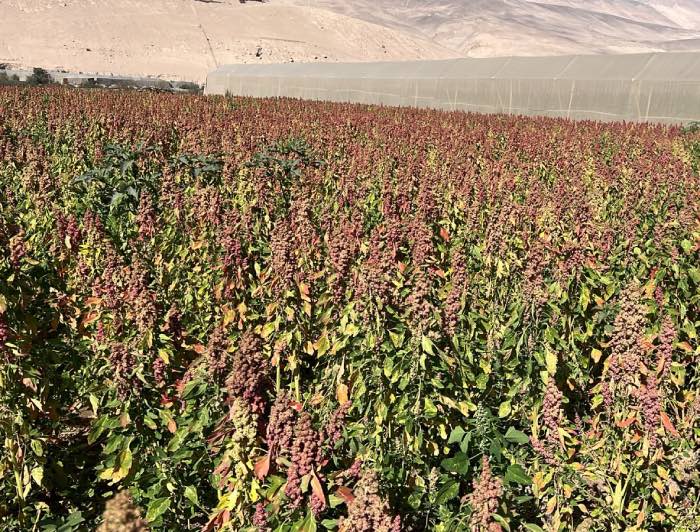
Producer Participation
“What is interesting is that we involved producers at an early stage. They themselves supported the decisions because we used participatory methodologies. That enabled them to enter the agricultural market easily today. Furthermore, we paid attention to what the market was demanding, which allowed us to generate an attractive offering for different consumers,” states the academic.
The new varieties aim to meet specific market needs. Outstanding among them are larger white grains, similar to international standards, as well as red and black varieties that expand the diversity available to farmers and consumers.
These advancements are already reflected in concrete figures. During the past year, 150 tons of Chilean quinoa were exported to the European market, including the Nieves variety (white grain) and Trauco variety (red grain). In parallel, domestic companies are working on commercializing these products for Chilean consumers.
National and International Collaboration
The development is part of a project supported by Fundación Copec-UC, which aims to validate the varieties from both a productive and commercial standpoint. Strategic partners such as Agrotop, Cooperativa Granos del Sur, and the Spanish company Algosur participated in this process, helping connect scientific results with market applications.
Beyond expansion into Europe, the program opened new avenues for international collaboration. This year, UC Chile consolidated ties with the Shanghai Academy of Agricultural Sciences (China), an institution that hosts an international center dedicated to quinoa research, generating opportunities for scientific exchanges and future commercial developments in Asia.
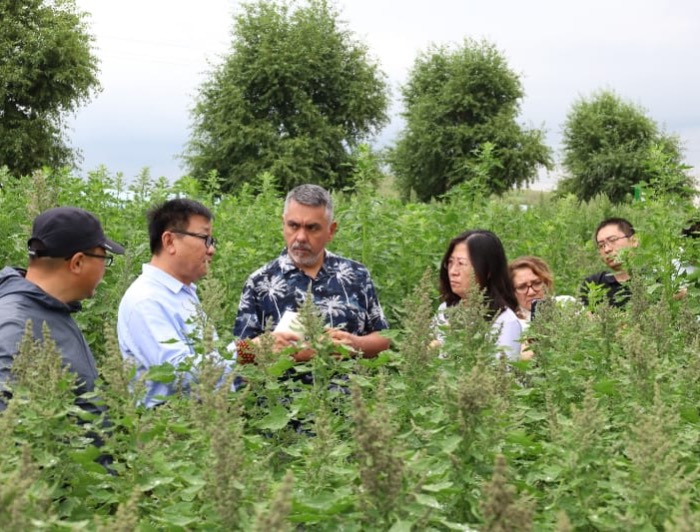
Looking ahead, the team is already working on a new generation of varieties that can respond to the challenges of climate change and the food industry. Goals include developing shorter-cycle plants and saponin-free seeds, which would reduce processing costs and increase productive efficiency.
“We want to be pioneers in establishing an unprecedented genetic base for quinoa and to be competitive in the market. That is what we are consolidating now, keeping in mind the growth of production and the coming challenges for Chilean agriculture,” concludes Francisco Fuentes.
More information: QuinoaLab


