
UC Chile’s Strategic Plan’s Path to Strengthen Discovery and Innovation
From funding and doctoral training to infrastructure, interdisciplinary collaboration, and public advocacy, the UC Chile 2026-2030 Strategic Plan is driving a new generation of projects to strengthen the University’s research ecosystem.

photo_camera The UC Chile 2026-2030 Strategic Plan was conceived based on the conviction that discovery and innovation remain among the most significant contributions that the University can make to society. (Photo credit: Nicole Saffie)
University research today faces a challenge that goes far beyond publishing in top scientific journals. Against a backdrop of growing competition for resources, tighter restrictions on public funding, and an ever-increasing demand to demonstrate the contribution of knowledge to the development of the country, conducting research and creating excellence is more challenging today than it was a few years ago.
Nevertheless, the UC Chile 2026-2030 Strategic Plan was conceived based on the conviction that discovery and innovation remain among the most significant contributions that the University can make to society. Thus, it places them at the core of its mission to “Transform Chile,” and promotes a set of projects aimed at strengthening the entire ecosystem of research and innovation: from funding and doctoral training to infrastructure, interdisciplinary collaboration, and the structuring of knowledge around major national challenges.
“Major scientific advances do not happen by chance. They’re the result of academic communities that have support, infrastructure, training, and opportunities for collaboration,” explains María Angélica Fellenberg, Vice President for Research and Graduate Studies. She adds: “With the 2026-2030 Plan, we are strengthening this ecosystem, because we believe that research is a fundamental tool for understanding the world and building a better future for Chile.”
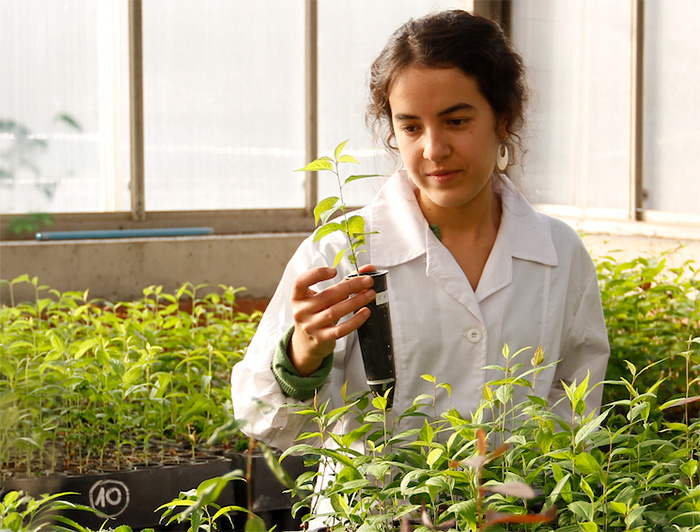
This vision is reflected in a series of projects that strengthen various aspects of the ecosystem of discovery and innovation. Some projects expand funding opportunities for cutting-edge research; others develop infrastructure for interdisciplinary collaboration, strengthen the training of new researchers or create better conditions for knowledge to contribute to the country’s major challenges.
One of the most well-established projects is Avanza UC Chile. After awarding nearly $3.8 billion to 113 initiatives in its first edition, the competitive grant program will start its second cycle this year, establishing itself as one of the main instruments of the Strategic Plan to promote discovery and innovation projects. Joining it are the initiatives UC Chile NEXUS and UC Chile Arca, which will create new spaces for interdisciplinary research and innovation, in addition to UC Chile Horizons and UC Chile Postgraduate, aimed at strengthening the training of new generations of researchers.
The ecosystem is completed by projects that seek to broaden the contribution of knowledge for the development of the country. UC Chile Challenges coordinates interdisciplinary expertise around the country’s major issues; Incide UC will strengthen the impact of research on public policy; Regional Networking and Living Laboratories will promote collaborative work with local communities; and the Innovation Center 3.0 will foster technology transfer and innovation.
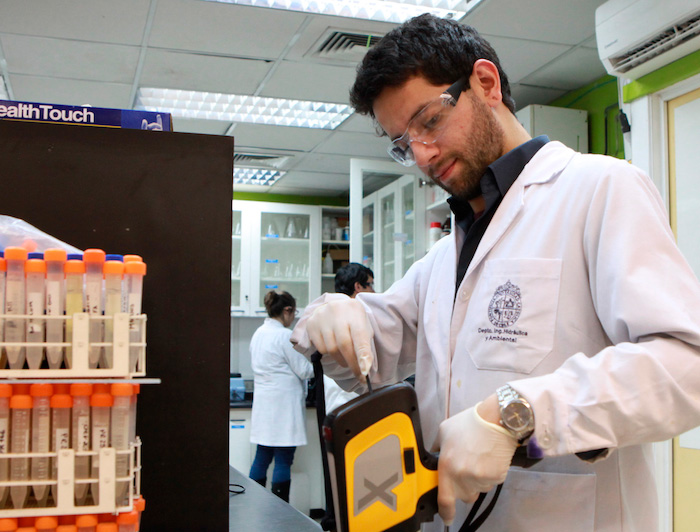
Research funding: UC Chile Avanza
UC Chile Avanza is an academic development fund for discovery, innovation, and reflection at the University, designed to promote bold projects of discovery and innovation, in response to the country’s challenges. The maximum funding is 36 million Chilean pesos per project for up to 18 months of implementation, which serves as seed capital for national and international collaborations. Its purpose is to lay a foundation that will enable the project to be positioned to secure additional competitive funding in later stages.
In the 2025 edition of UC Chile Avanza, 337 projects were submitted and 113 were awarded funding totaling nearly $3.8 billion. These initiatives, which began last March, involve 199 researchers from UC Chile—belonging to 24 faculties and interdisciplinary units—and 169 external researchers. Nearly half of the projects (58) are being carried out outside of the Santiago Metropolitan Region.
The guidelines for the 2026 edition of UC Chile Avanza were published on June 30th. The application period runs from July 31st to September 30th, and the results will be announced on December 21st.
“We are very pleased to launch a new edition of UC Chile Avanza. The experience of the first edition allowed us to gather valuable feedback from the academic community, which is reflected in some of the updates and adjustments incorporated into this year’s guidelines,” explains María Elena Boisier, Director of Research and project leader. “We hope that this second edition will attract an even greater number of applications, strengthen the participation of national and international strategic partners, and continue to promote interdisciplinary projects that contribute to advancing knowledge and addressing complex challenges.”
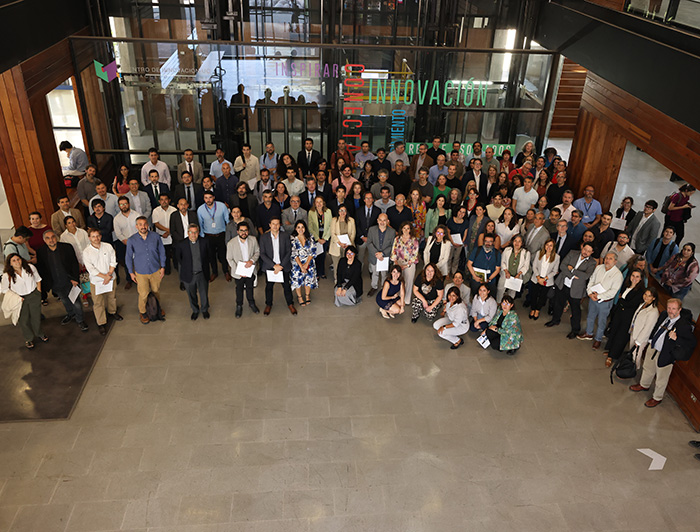
New spaces for discovery and innovation
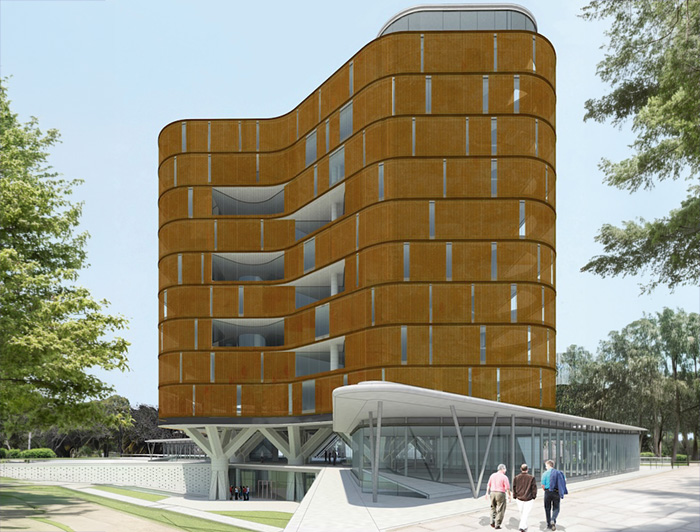
The university will have two new buildings: UC Chile Arca at Oriente Campus, and the Interdisciplinary Research Center, at San Joaquín Campus. Both are part of the project UC Chile Convergence, which is aimed at providing specialized infrastructure for interdisciplinary collaboration, fostering discovery and innovation. These spaces will serve as laboratories for developing solutions to national challenges, promote contemporary artistic creation, and broaden UC Chile’s global impact.
UC Chile Arca: One of the most striking features among the new buildings to be constructed as part of the plan, UC Chile Arca will be a 2,000-square-meter building dedicated to preserving, promoting, and showcasing the University’s heritage collections. As the country’s first publicly accessible repository, it will make it possible to bring this heritage closer to researchers, artists, and the general public, becoming a leading center for research and cultural innovation.
“UC Chile Arca is a project that reinvents how people engage with our cultural collections, inspiring the creativity of our community and sending a powerful signal that UC Chile is opening its heritage to researchers and artists, thereby increasing people’s access to culture in a transformative way,” says José Manuel Izquierdo, Director of UC Chile Arts and Cultural Heritage.
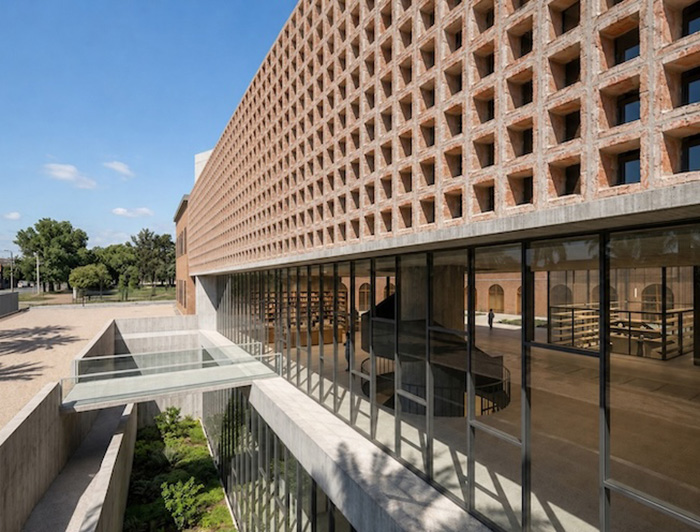
UC Chile Interdisciplinary Research Center: a 16,121-square-meter building on the San Joaquín Campus which will provide flexible laboratories, maker spaces, creative workshops, and co-design areas for collaborative research. Another project, UC Chile NEXUS, will bring this building to life.
UC Chile NEXUS: this project will give life to the new Interdisciplinary Research Center. Its objective is to bring together teams from various disciplines to conduct cutting-edge research and innovation, fostering collaborations that would be unlikely to develop within the University’s traditional structures. Once fully operational, it will bring together over 200 researchers and students each year on projects capable of generating high-impact publications, creative works, scientific ventures, and solutions to social and technological challenges.
“UC Chile NEXUS is an ongoing project which proactively seeks to strengthen the position of cutting-edge research and innovation in Chile, in conjunction with the world’s most influential scientific and innovative communities,” explained UC Chile President Juan Carlos de la Llera during the celebration of the University’s 138th anniversary on June 12th. “It is a project that requires a significant investment, but, if we do not want to lose our relevance as part of these networks and play a crucial role in the developments that are currently shaping the world, it becomes imperative to do so.”
SAVIIA: Interdisciplinary research also requires that data be discoverable and interoperable. For this purpose, SAVIIA was created: a digital infrastructure that organizes and safeguards scientific and territorial information generated by theUC Chile Network of Regional Centers and Stations, enabling the connection of data from different disciplines and facilitating new collaborations among researchers.
“We’ve managed to create a cloud-based platform that currently holds data from all the stations that are generating information, and we can already see how they could be interconnected to facilitate interdisciplinary work. We could explore artificial intelligence or machine learning tools to help identify patterns and generate new scientific questions,” explains Rodrigo Carrasco, the project leader.
Training new researchers
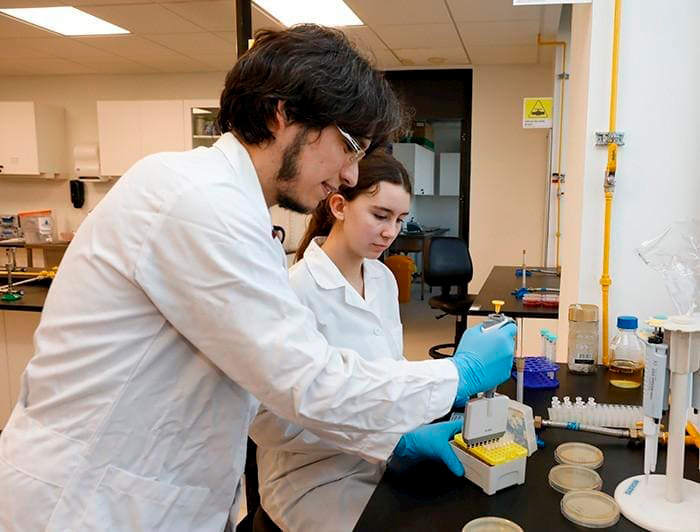
UC Chile “Horizons” Talent Incubator: this is a platform that aims to provide early support to students interested in research and innovation, offering them training opportunities, coaching, and participation in projects that enable them to develop an academic trajectory as undergraduate students.
“Horizons seeks to support our students throughout the entire process involved in becoming a researcher in any discipline: from making initial contact through social activities, by participating in smaller-scale projects—such as the Undergraduate Research grants— or training workshops. In some cases, the research trajectory will be consolidated through a minor in innovation and discovery, an internship, or participation in more advanced projects,” explains Pamela Fernandez, Executive Director of the Office of the Vice President for Research and head of the project.
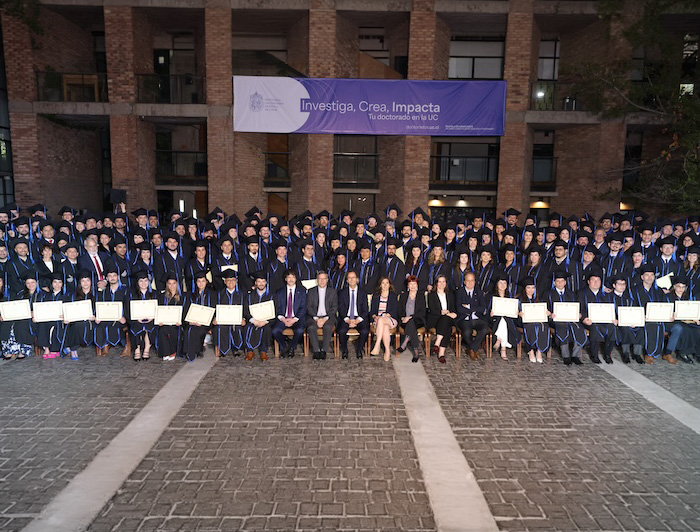
UC Chile Postgraduate Programs: This project aims to provide UC Chile with a highly internationalized doctoral program, featuring joint supervision leading to established dual degrees (degrees from UC Chile and at a renowned international university), robust and sustainable funding, and coordinated educational pathways starting with the master’s program.
“UC Chile already has numerous agreements for joint supervision programs, through which 230 students to date have earned dual doctoral degrees with international universities of excellence. Among other things, what we seek with this project is to strengthen and consolidate the internationalization of the doctoral program, in such a way that our students can develop the skills and collaborative networks necessary to address complex problems, thereby having an impact on the development of the country and the world,” stated Diego Cosmelli, Director of the College of Doctoral Programs and head of the project.
Connecting research and innovation with the needs of the country
Strengthening research and innovation is only one part of the challenge. For this knowledge to effectively contribute to the development of the country, it is necessary to create the conditions for it to engage with public policy, local communities, innovation, and major national issues. To this end, the UC Chile 2026-2030 Strategic Plan promotes a series of projects that aim to more closely integrate the University’s capabilities with the needs of Chile.
UC Chile Challenges: The University possesses research and innovation capabilities across all disciplines. UC Chile Challenges seeks to coordinate this potential around two or three strategic themes per cycle, creating new opportunities for collaboration between researchers and academic units to help understand and address some of the country’s most pressing challenges. Rather than defining research agendas, the project creates the conditions for knowledge to converge where UC Chile can make an especially significant contribution.
“UC Chile Challenges seek to identify those areas where the University can make a difference and generate the conditions for the entire UC Chile ecosystem to converge around these challenges,” says Francisca Barros, Director of the Office of Public Engagement, and co-leader of the project. “Thus, students, faculty members, and professionals will be able to work together, putting their skills to work for the country”.
Incide UC: Not every research with the potential for impact manages to influence public policy. Incide UC seeks to bridge this gap by strengthening the University’s capacity to transform evidence and specialized knowledge into concrete contributions to public policy, national debate and other decision-making processes.
Regional engagement and living laboratories: Decentralizing discovery. This is the objective of this project: to put applied research from UC Chile at the service of the priority challenges facing country’s regions, generating field training opportunities for student and young researchers. This network will transform campuses, research stations and regional partnerships—including governments, universities, businesses, social and cultural organizations, and communities—into living laboratories, real-world spaces for experimentation where solutions are tested, data is generated, and intervention models are co-designed prior to their implementation and regional scaling.
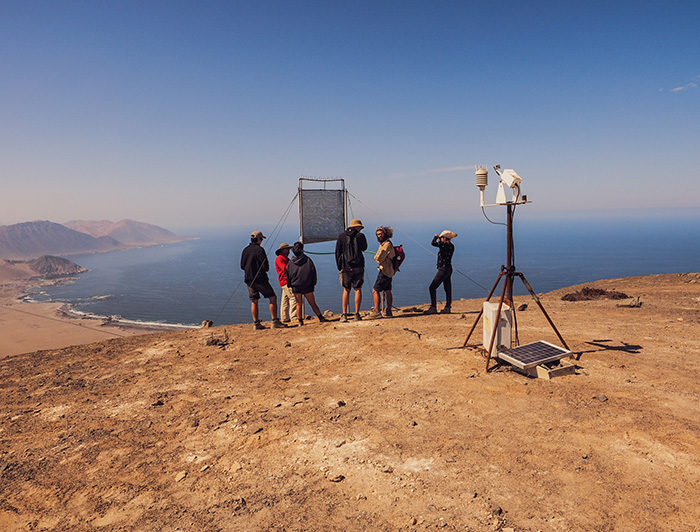
“Regional engagement is the ability to build knowledge in partnership with local communities, understanding their challenges and opportunities to generate impactful research, innovation, training, and knowledge transfer. Through its nationwide presence, via campuses, centers, regional stations, and various collaboration initiatives, the University connects its academic and scientific capabilities to Chile’s real needs, contributing to the sustainable development of local communities and strengthening a relationship of mutual learning and value creation,” adds Álvaro Ossa, Director of UC Chile Transfer and Development and head of the project.
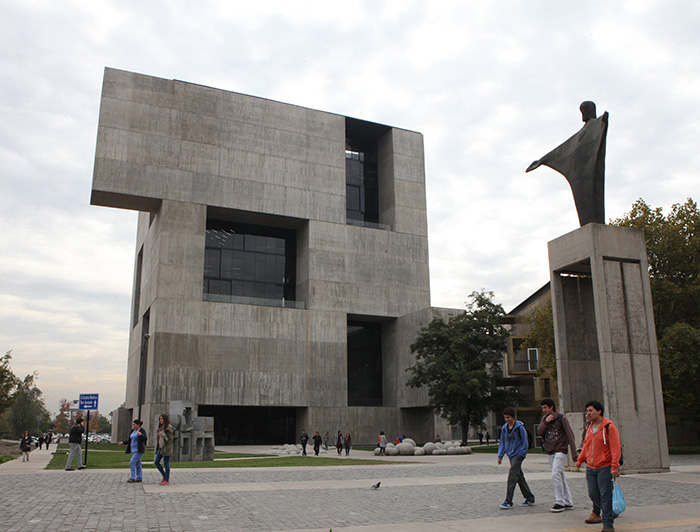
Innovation Center 3.0: The project seeks to transform the UC Chile Anacleto Angelini Innovation Center into the primary hub of innovation within the university, connecting academic skills, strategic alliances, and technology transfer to accelerate the development of solutions that have an impact on society and the country.
“We are defining the strategy and the role of the Innovation Center within the framework of the 2026-2030 strategic projects, as a fundamental part of UC Chile’s innovation engine, creating a bridge between the University’s capabilities and the major challenges facing society and the country,” sates Francisca Barros, Director of UC Chile Strategy and Public Engagement, from the Office of the Provost for Institutional Management and project leader.
Innovation and cultural heritage
With the objective of strengthening artistic creation, the humanities, and the promotion of cultural heritage, UC Chile will open a new call for proposals for the Arts and Cultural Heritage Fund in late July, which will distribute a total of 400 million Chilean pesos, with a maximum funding of 20 million Chilean pesos per project.
The call for proposals, which will open on July 27 and remain open until October 29th, seeks to promote initiatives of excellence with reach and impact both within and outside the university.
According to José Manuel Izquierdo, Director of UC Chile Arts and Cultural Heritage, this initiative is aimed at “funding high-level projects, in a variety of dimensions and formats, in the creative fields and cultural heritage, thereby enabling our cultural initiatives to have a greater impact on the community.” He also highlights that this fund understands innovation as a broad space of possibilities which encompasses the arts as well as the humanities, promoting interdisciplinary collaboration among academics and strengthening the ties with institutions outside UC Chile, with the objective of expanding the reach and impact of the cultural initiatives developed by the university community.


