Interdisciplinary Brain: A Tool for Teaching Neuroscience to Different Areas at UC Chile
With more than 30 3D-printed brains, the classes taught by Professor Ariel Lara, an academic at UC Chile College and the Faculty of Medicine, seek to address and explain how this organ affects social behavior. This innovative educational resource was developed with the support of the UC Chile Faculty of Architecture, Design and Urban Studies.
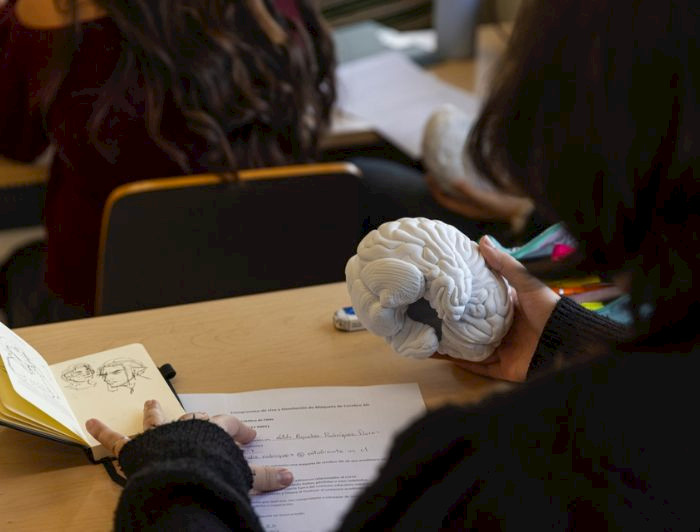
photo_camera 'College Seminar' is a first-year course taught by the unit's academic staff to develop cross-disciplinary skills for university life, encourage critical thinking around interdisciplinarity, and work on various topics related to the research of those who teach it. Photo credits of student handling 3D brain: Karina Fuenzalida.
Named “Brian,” about “brain,” the scale 3D prints were given to first-year students in the Bachelor of Arts and Humanities and Bachelor of Social Sciences programs in the College Seminar course: “Unraveling social behavior: from individual cognition to collective dynamics.” As a friendly approach for students who are not necessarily familiar with neuroanatomy, this tool seeks to be part of a sensory and learning experience that facilitates understanding of the role the brain plays in social behavior.
Ariel Lara, an academic at UC Chile College and the Faculty of Medicine, who is also part of the Department of Neurology and a member of the Interdisciplinary Center of Neuroscience, NEURO UC gave the models to his 51 students, who will be able to draw and identify the different parts of this organ as the classes progress. "Most of them were surprised, happy, and even anxious: they wanted their brains right away. The idea is that they take them with them to class and work with whiteboard markers to mark and draw on areas of the brain, because the advantage is that it is washable and reusable," he explained.
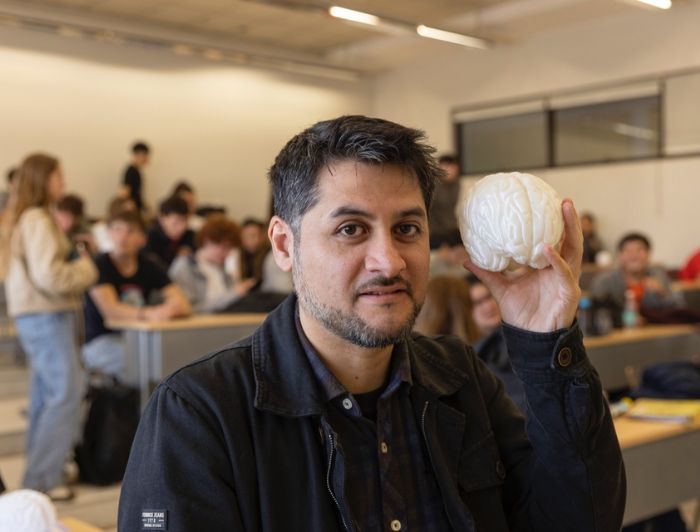
College Seminar is a first-year course taught by the unit's academic staff. It aims to develop cross-cutting skills for university life, encourage critical thinking on interdisciplinarity, and explore various topics related to the research of its instructors. In this context, Professor Lara's course aims to address the phenomenon of social behaviors, define what they consist of, explore their various types and perspectives, and provide a biological basis for understanding their underlying mechanisms.
The professor emphasizes the importance of approaching neuroscience comprehensively, where different areas converge to explain social behavior, so that students from the arts, humanities, and social sciences can engage with this subject in an informed and engaging way. "The course includes various types of behavior. We begin, for example, by explaining why this social brain exists and what hypotheses would explain it. We discuss anthropological and cultural hypotheses, as well as prosocial and antisocial behaviors. We also address topics such as love and loneliness, and we end up discussing organization and social well-being," he added.
Model creation
The collaboration with the FABHAUS Digital Manufacturing Laboratory of the Faculty of Architecture, Design and Urban Studies reflects the interdisciplinary nature of creating, developing, and generating a tangible educational tool for the classroom. The digital manufacturing equipment offered by FABHAUS, including printing machines, cutting machines, and engraving machines, is available to the UC Chile community, enabling the development of various projects.
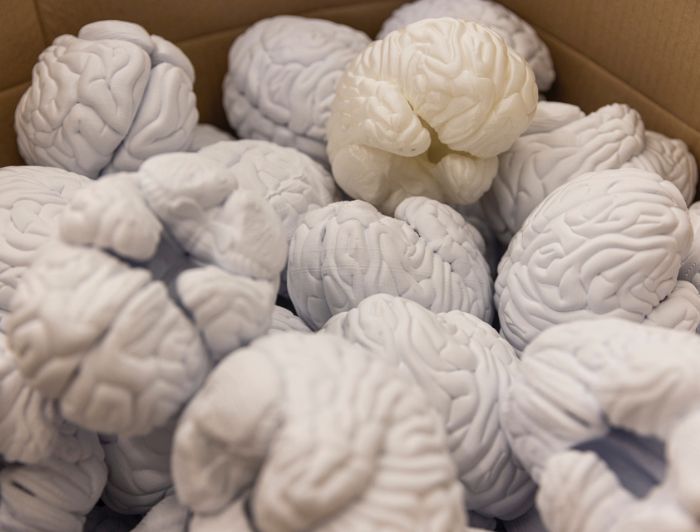
The space has a team, led by Francisco Chateau, trained in laser cutting, 3D printing, and thermoforming, among other techniques. Regarding the creation of 3D brains, printing six brains, for example, took three days on a single machine, to make the model as similar as possible to the actual organ, including details such as grooves, fissures, and lobes, at the highest speed allowed.
“We used 3D printing machines with filaments to make the brains. They were made with PLA, one of the most common plastics on the market, which is resistant, has different levels of brightness, and is recyclable,” explained Cristóbal Alfaro Figueroa, Coordinator of FABHAUS UC.
The advantage of interdisciplinarity involves how we create and design the course. Taking advantage of the university's resources, we partnered with the laboratory, and they advised us on how to carry out this project. With their help, we were able to develop this educational resource. It is essential to take advantage of the UC Chile ecosystem in interdisciplinarity, not only in the classroom but also with the people who work here and interact with us daily," said academic Ariel Lara.
The learning experience
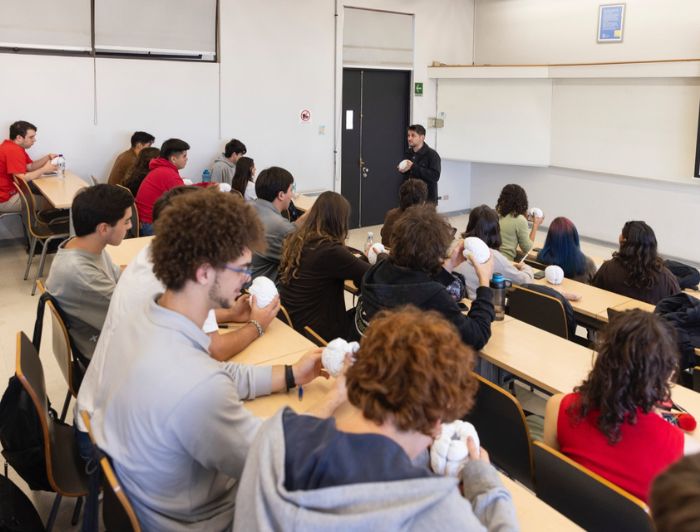
For academic Ariel Lara, having tangible material to teach the phenomenon of social behavior from the perspective of neuroanatomy was a way to approach the study in a more hands-on manner. This led to the idea of a resource that today allows content to be developed in a dynamic and participatory way.
“The fact that they can manipulate the information with their hands and that it is much more visual, I think, makes the sensory experience different from looking at a neuroanatomy book, which they most likely won't do, but rather look at a tablet. It's not the same thing,” said the teacher.
In the same context, the neuroscience specialist argues that social behavior is a relevant topic of study, as recent phenomena, such as the pandemic, have caused it to be “modified” and/or “altered,” influencing our social skills and the way we interact.


