Ten Years of ACCESS: A Decade of Collaborative Research Between Chile and Sweden
With nearly 230 researchers, university authorities and doctoral students, UC Chile played a leading role commemorating the 10th anniversary of the ACCESS Forum, an initiative that has been promoting interdisciplinary research, doctoral training, and academic cooperation between Chile and Sweden since 2015.
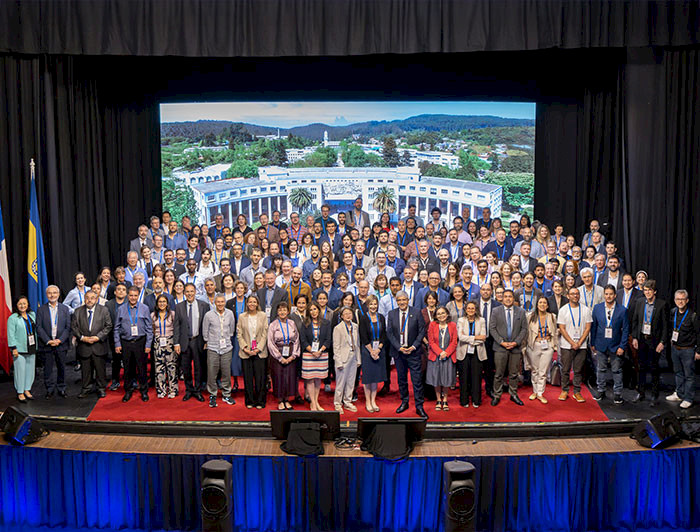
photo_camera The ACCESS Forum, held at the University of Concepción, brought together nearly 230 attendees from six Swedish and seven Chilean universities. (Photo credit: University of Concepción)
From January 12 to 16, the city of Concepción hosted a new edition of the ACCESS Chile-Sweden Academic Forum, an international gathering that brought together researchers, university authorities, and doctoral students from both countries to commemorate the 10th anniversary of this scientific collaboration platform.
The event, held at the University of Concepción, brought together nearly 230 attendees from six Swedish and seven Chilean universities, including university authorities, researchers, and doctoral students. For UC Chile, the delegation included 31 representatives, including 22 faculty members, 5 doctoral students, and 4 representatives from the Office of the Vice President for Research and Graduate Studies (VRIP as per its initials in Spanish), consolidating ACCESS as one of the most significant bilateral academic spaces of the last decade.
The 2026 edition of the Forum had as main axis not only the development of interdisciplinary research workshops, but also a retrospective look at its trajectory since 2015, when conversations began to shape this initiative based on dialogue between UC Chile and Lund University. This process was subsequently finalized with the signing of the letters that formally established ACCESS in November 2016, with the aim of building a sustained academic bridge between Chile and Sweden. Over the past ten years, ACCESS has grown steadily in terms of the number of participating institutions, in disciplinary diversity, and in the scope of its research.
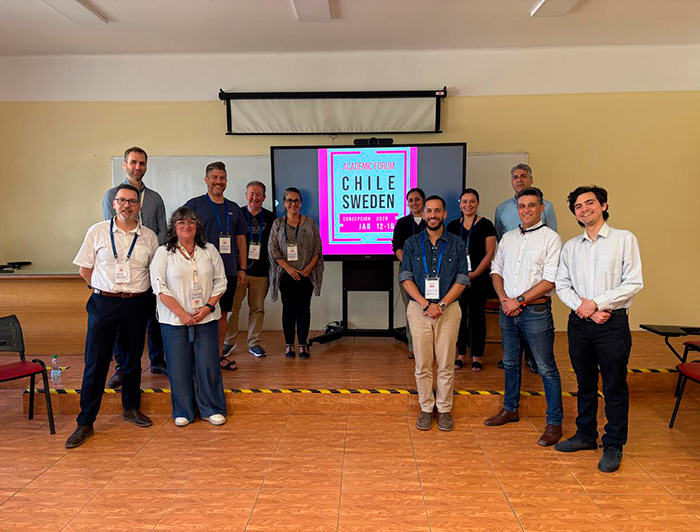
This Forum has been characterized by bringing together young and senior researchers to address global challenges related to health, the environment, and society, under a collaborative model that promotes transdisciplinary work and the generation of new knowledge with social impact.
It was no coincidence that this commemoration took place in Concepción. For the first time, the Forum was held outside of Santiago, reinforcing its decentralizing character and its connection to the regions, in a week that combined science, institutional reflection, and cultural activities, and which once again positioned ACCESS as a mature, active platform with a promising future.
Ten years of ACCESS: a vision from UC Chile and Swedish universities
From UC Chile’s perspective, the assessment of this first decade is largely positive. For María Angélica Fellenberg, Vice President for Research and Graduate Studies, the growth of the Forum demonstrates an initiative that has managed to consolidate itself over time. “It started in 2015 with a conversation between university presidents, and today we see everything that has happened in terms of the growth of institutions, researchers, and topics addressed,” she noted, highlighting that in each edition involves between 200 and 250 researchers reflecting on challenges common to both countries.
This trajectory aligns directly with UC Chile’s institutional project. “This forum is very much oriented toward addressing challenges that matter to us from an interdisciplinary perspective, where each discipline contributes its point of view to give answers to complex problems,” stated Fellenberg, underscoring the consistency between ACCESS and the UC Chile Dream of generating knowledge with a national and global impact.
From UC Chile Office of Research, Director María Elena Boisier emphasized that ACCESS was key when promoting the internationalization of research within the University. “It was our kickstart into internationalization,” she mentioned, recalling that this experience contributed to strengthening internal structures such as the Sub-Office for International Research, and positioning global collaboration as a strategic axis for UC Chile.
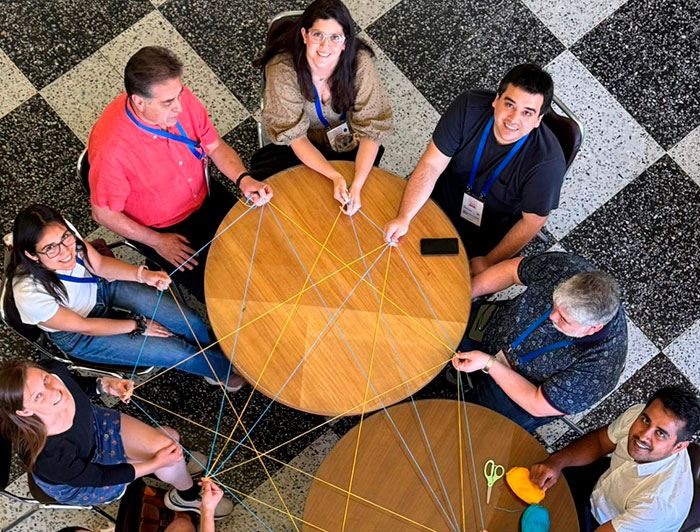
One of the most significant milestones of this decade has been the formal incorporation of doctoral students since 2022, an aspect that the Vice President described as a qualitative leap for the Forum. “This gives it tremendous power, because it allows us to progress in more international PhD programs, joint supervisions, and double degrees,” she explained, along with highlighting the open and competitive nature of research topics, defined from the academic communities themselves, under a bottom-up model.
Boisier added that the Forum has managed to stay aligned with the focus on research with social impact. “The topics that we develop are always aimed at generating an impact on society, at a national and international level,” she mentioned, also noting the role of instruments such as the Erasmus funding, which has allowed the exchange of students, academics, and professionals, strengthening institutional capacities.
From Sweden, university authorities agreed in underscoring the strategic value of ACCESS. Lena Eskilsson, Lund University’s Vice President, highlighted that the Forum is sustained thanks to “a very strong combination of a bottom-up approach and sustained institutional commitment,” factors that explain its continuity and success over time, along with the ongoing support from the Swedish Embassy.
Collaborative research and doctoral leadership in a decade of joint work
In addition to the celebration, the 2026 Forum focused once again on research as the driving force behind the Chile-Sweden collaboration. During the week, 13 thematic workshops were held, conceived as interdisciplinary spaces to address global challenges related to the Sustainable Development Goals, integrating perspectives from the basic, applied, and social sciences.
For Marcela Sjöberg, associate professor from the Faculty of Biological Sciences and part of a group focused on child obesity, ACCESS plays an irreplaceable role. “Academics don’t always have time or space to interact with other disciplines, let alone at an international level,” she mentioned, noting that the Forum allowed learning from comparative experiences and understanding that many local problems are also global challenges.
Along the same lines, Sjöberg highlighted the value of incorporating diverse perspectives. “We are incorporating perspectives from urban economics and health economics to identify more innovative and sustainable strategies,” she explained, emphasizing prevention and the long-term impact on public health.
UC Chile researcher Gareth Owen, who has been part of ACCESS since its inception and is now a visiting professor at Uppsala University (Sweden), highlighted the Forum’s evolution towards a closer relationship with the productive sector. “It’s no longer just basic science; we are also looking at how companies in Chile and Sweden can contribute to research,” he stated, highlighting on-site visits and contact with university spin-offs as part of the learning process.
Researching to move forward
In this edition, UC Chile played a key role by hosting three research workshops at the ACCESS Forum, each led by UC Chile academics who coordinated binational teams composed of doctorate students, young researchers and senior academics:
- Child obesity and public health
Workshop: Addressing child obesity by mobilizing science, public policy, and society
Head researcher: Marcela Sjöberg, associate professor from UC Chile Faculty of Biological Sciences, led an interdisciplinary effort aimed at addressing child obesity through prevention, public health, and formulating sustainable strategies with social impact.
- Sustainable production of seafood and food security
Workshop: Sustainable production of seafood to ensure food security in face of climate change
Head researcher: Philip Detleff, academic from the UC Chile School of Veterinary Medicine, focuses on the challenges of sustainable aquaculture and fisheries production in face of climate change and its implications for food systems.
- Nature tourism, conservation and climate change
Workshop: Nature based tourism and conservation of the cryosphere in the context of climate change
Head researcher: Sebastián Ruiz, academic from UC Chile Institute of Geography, led a theme focused on the conservation of fragile ecosystems, sustainable tourism, and territorial resilience in the context of climate change.
In all three cases, UC Chile’s leadership enabled the coordination of binational and transdisciplinary teams, reinforcing doctoral teaching, international collaboration, and the presentation of new research agendas with local and global impact.
The invisible work behind the Forum and the challenges ahead
Organizing a forum of this magnitude involves sustained and often invisible work. For Sofía Cubillos, UC Chile research coordinator and part of ACCESS since its second edition, the platform has also been a space for institutional learning. “It not only connects academics and PhD students but also allows sharing best practices among those of us who work in university administration,” she noted, highlighting workshops on open science, responsible research, and relationships with funding agencies.
Cubillos stressed that the growth of ACCESS during the last ten years has been evident, both in the number of participants as well as in the diversity of the stakeholders involved. “It is very fulfilling to see how fruitful this version has been,” she stated, valuing the Forum’s role in bringing together universities, embassies, and public organizations.
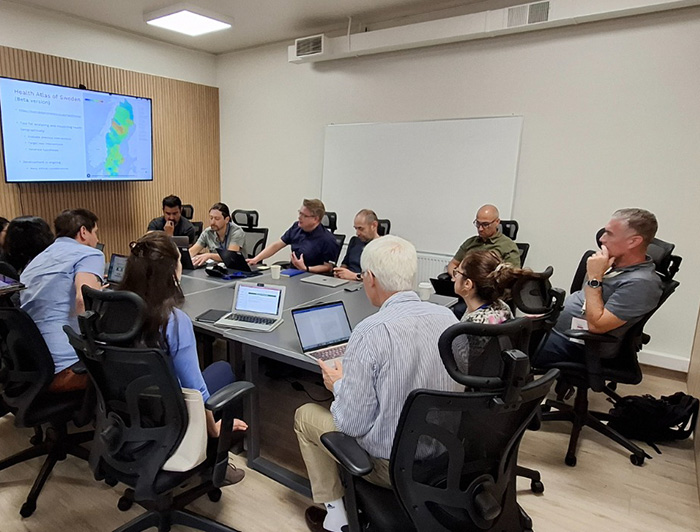
From UC Chile Sub-Office for International Research, sub-director Christian Blanco emphasized the collective experience in Concepción. “It was a very productive week, with happy academics and new upcoming projects,” he mentioned, thanking the work of University of Concepción as host, and confirming that the next edition of the Forum will take place in Sweden, at Gothenburg University, in 2027.
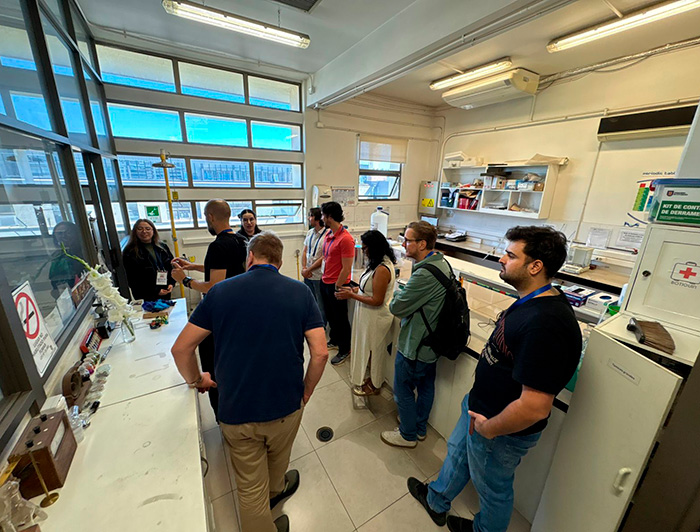
The week of activities also included field trips and cultural visits, such as a visit to the art gallery of the University of Concepción, the “Pinacoteca,” where the mural “Presencia de América Latina” (Presence of Latin America) is located; and to the Sanctuary of the Hualpén Peninsula, reinforcing the human, territorial, and cultural dimensions of scientific collaboration.
At the opening ceremony, University of Concepción President Carlos Saavedra summarized the spirit of the Forum by pointing out that ACCESS is “a platform for scientific, human, and cultural exchange,” recalling that global challenges require solid, long-term alliances. Ten years after its creation, the ACCESS forum not only celebrates its history, but also projects a collaboration that continues to grow, with new generations, new questions, and a shared commitment to a more sustainable future.


