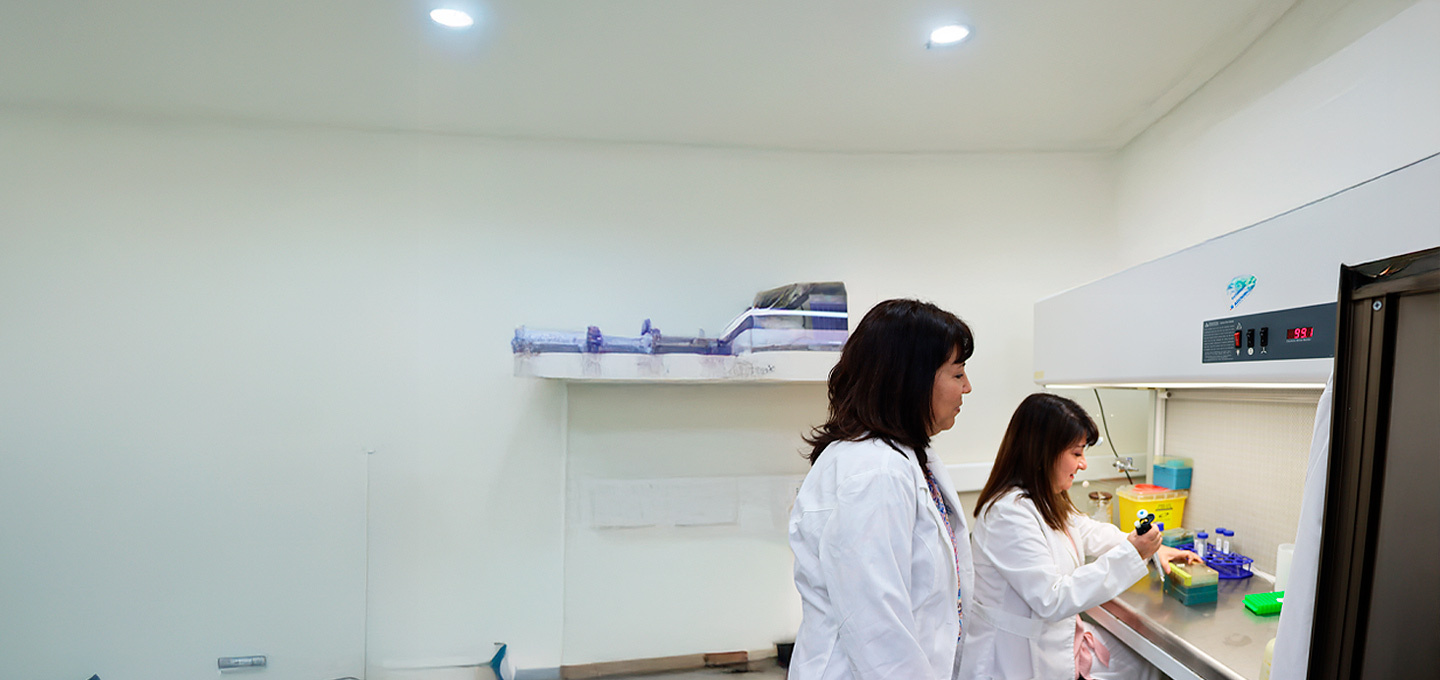
UC Chile Innovation Against Neurodegenerative Diseases Crosses Borders
This is the first international transfer of a potential drug created at UC Chile, an unprecedented event in Chile. The drug is is Neurotinib, developed by academics Alejandra Álvarez and Silvana Zanlugo, and seeks to combat Alzheimer’s and Parkinson’s, among other diseases. The agreement with US-based Neurala Inc marks a milestone, paving the way for scientific innovations created at national universities to become treatments with global impact.
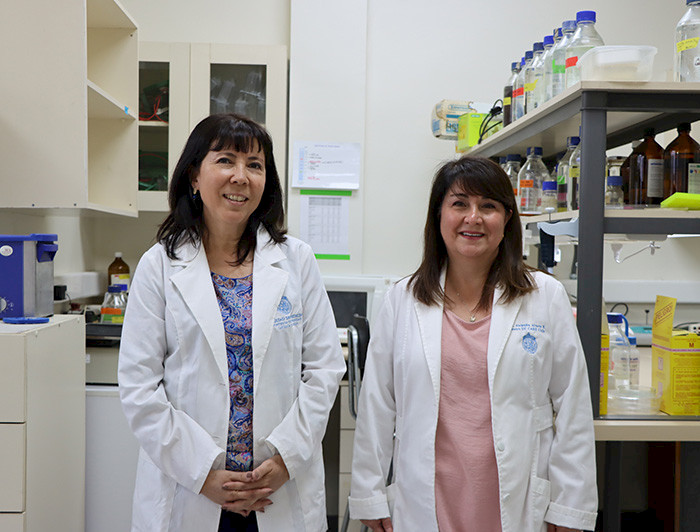
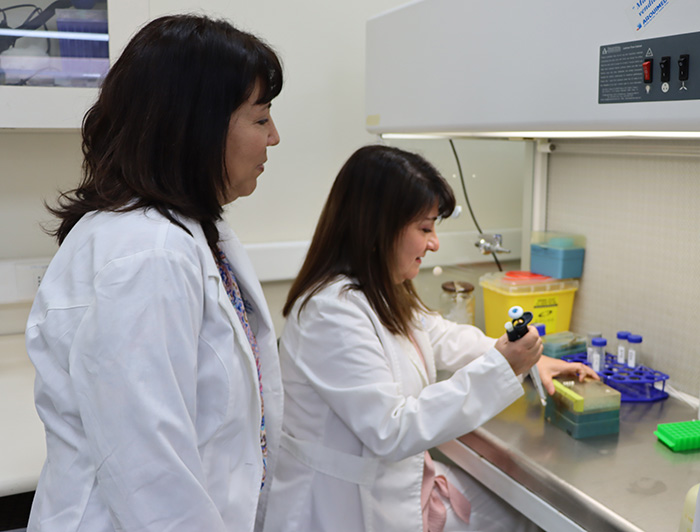
photo_camera In this new phase, Neurala Inc. will take over the development of the clinical trials in patients, with the aim of validating the therapeutic efficacy of Neurotinib, while the teams led by UC Chile professors will continue to conduct pre-clinical studies on epilepsy and Parkinson’s. (Photo credit: UC Chile Faculty of Medicine)
According to the World Health Organization (WHO), by 2050, it is estimated that more than 250 million people around the world will suffer from some form of neurodegenerative disease, such as dementia, Alzheimer’s and Parkinson’s, among many others; which progressively affect aspects such as autonomy, memory, and quality of life for those who suffer from them. This in addition to high emotional and economic costs for the families and health systems.
Faced with this challenge, science becomes a source of hope. From the laboratories of UC Chile, Alejandra Álvarez, from the Faculty of Biological Science, and Silvana Zanlungo, from the Department of Gastroenterology of the Faculty of Medicine, have worked for over a decade on the development of a new technology that represents a decisive step towards becoming a new therapeutic alternative.
A few weeks ago, an exclusive license agreement was signed with Neurala Inc., a subsidiary of Civala Company, both headquartered in the United States. This is the first technology transfer agreement of its kind developed by UC Chile in the field of pharmacology and a pioneering achievement in Chile, setting a precedent for the internationalization of locally developed research.
What is this technology about?
This new development, called Neurotinib, consists of a molecule with the potential to become a new treatment for various central nervous system diseases such as epilepsy, Parkinson’s disease, and Alzheimer’s, as well as lysosomal disorders including Niemann-Pick, Tay-Sachs, and Gaucher, all of which currently lack effective therapies and represent unmet medical needs worldwide.
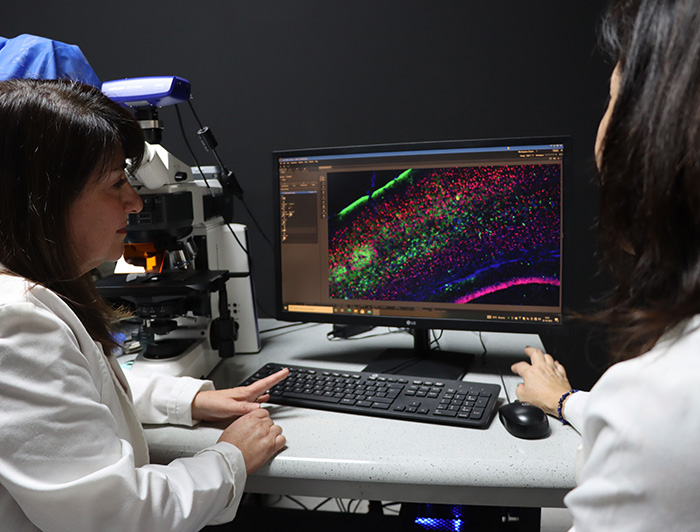
“Thanks to its high selectivity and its ability to cross the blood-brain barrier—the membrane that separates the bloodstream from the brain for protection—Neurotinib shows significant potential for clinical applications in central nervous system diseases. We were able to validate its potential in preclinical studies, and now, with the transfer to the U.S.-based company Neurala, we can continue advancing toward the clinical phases of this potential drug,” explain professors Álvarez and Zanlungo, who lead the research.
The development of Neurotinib is the result of the work of the UC Chile professors alongside researchers from the National Center for Advancing Translational Sciences (NCATS), of the National Institutes of Health (NIH) in the United States. Both teams have led a high-level scientific collaboration, integrating basic research, experimental trials, and training for young scientists.
The importance of public funding
The development of this innovation has been made possible thanks to a solid foundation of scientific research and sustained public funding provided by the National Agency for Research and Development (ANID, by its Spanish acronym). For more than a decade, seven ANID-funded projects—carried out at UC Chile in collaboration with the NIH—have enabled progress, from the identification of the C-ABL kinase inhibitors to the preclinical validation of Neurotinib.
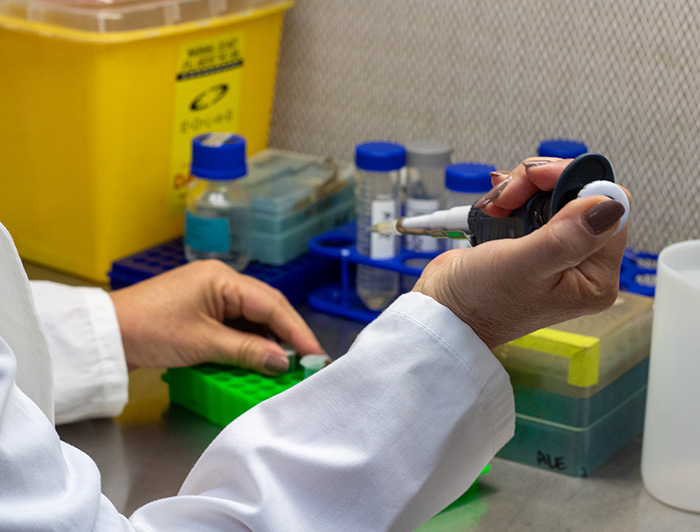
“For ANID, this promising result demonstrates the importance of public funding for scientific research, and its ability to generate concrete advances and solutions that benefit society. Cases such as Neurotinib reflect how sustained investment in the generation of new knowledge can translate into innovation, technology transfer and well-being for people, with a global impact,” says Alejandra Pizarro, national director of ANID.
Institutional support and strategic vision
For UC Chile, this achievement reflects the maturity of its research and technology transfer ecosystem, as well as the active collaboration between its faculties and the Office of Transfer and Development.
“The development of this technology reflects the quality and depth of the science carried out at our university. Research projects like this open up the possibility of contributing from Chile to the treatment of diseases that affect millions of people around the world,” notes the Vice President for Research and Graduate Studies, María Angélica Fellenberg.
Along these lines, Silvana Zanlungo, an academic from the Faculty of Medicine, notes that “the story of Neurotinib is also a story of institutional collaboration. From our different faculties, we have received the support and trust of UC Chile to move forward with a complex, long-term research effort that is now projected to have a global impact. This collective commitment is what has made the technology transfer possible.”
Next steps: toward the clinical stage
In this new phase, Neurala Inc. will take over the development of the clinical trials in patients, with the aim of validating the therapeutic efficacy of Neurotinib and moving forward with obtaining authorization from the US Food and Drug Administration.
The agreement stipulates that UC Chile and NIH-NCATS laboratories will continue to participate in the next stages of research. The teams led by professors Álvarez and Zanlungo will continue to conduct pre-clinical studies on epilepsy and Parkinson’s, strengthening Neurotinib’s progress toward clinical validation and eventual use as a drug.


