UC Chile Patagonia Station: Ten Years of Scientific Research in the Far Reaches of Chile
Located in the heart of the Aysén Region, between glaciers and forests, this UC Chile station has established itself as a key natural laboratory for monitoring climate change and biodiversity. In its ten years, led by the Faculty of History, Geography and Political Science, it has become a platform for research, teaching and international networking, addressing global challenges and the human impact on ecosystems and local communities in situ.
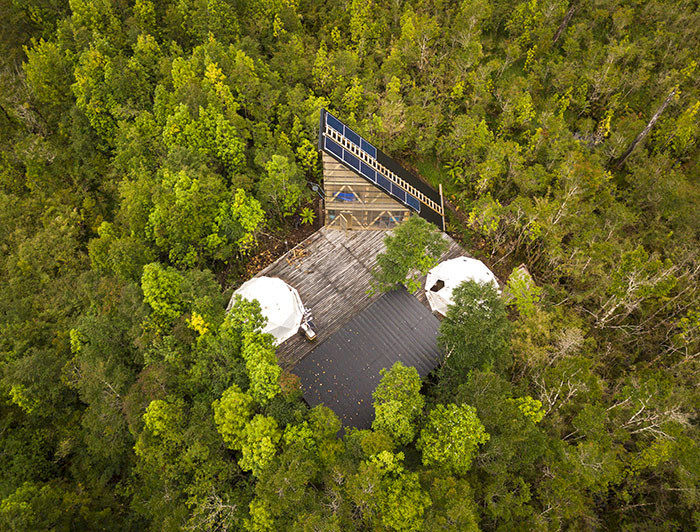
photo_camera UC Chile Patagonia Station is located in the middle of a dense forest in Exploradores Bay, in the Aysén Region, in the heart of the Patagonia. (Photo credit: Germán G Gundermann)
In 2009, UC Chile received a concession from the Ministry of National Assets for a 5,014-hectare property in Exploradores Bay, nestled deep in the Aysén Region. To get there from Santiago, you have to travel almost 2,000 kilometers by air, land, and sea. These conditions are precisely what make it an ideal place for research on climate change and the effects that humans have on ecosystems from different perspectives, making it an interdisciplinary space par excellence.
In 2015, it officially became a university station in its own right. Thanks to the collective effort of academics, students, professionals, and administrators from different faculties and the Leadership Council—led by the Institute of Geography—, a space for research and teaching was successfully created, defying distance, rugged terrain, and the hardships of a rainy climate that gives little respite.
“Over the past ten years, UC Chile Patagonia Station has been built on the work and vision of researchers and students, who have sustained this project as a living space for research, teaching, and connection with the territory,” states Maria Angélica Fellenberg, Vice President for Research and Graduate Studies. “Centers like these are fundamental for fostering research with real impact, capable of addressing local needs and contributing to sustainable territorial development. The science generated here not only produces knowledge of excellence, but also strengthens capacities, relationships, and relevant solutions for communities and the country.”
A platform for research
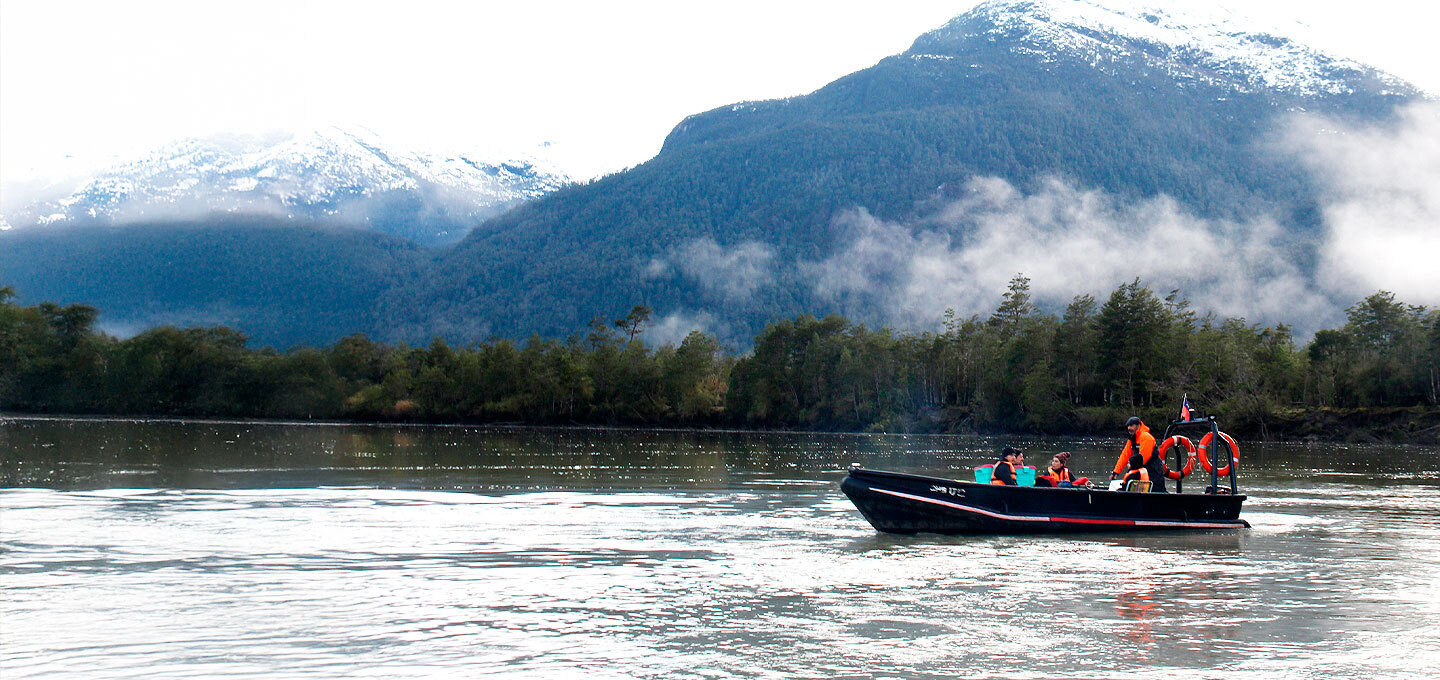
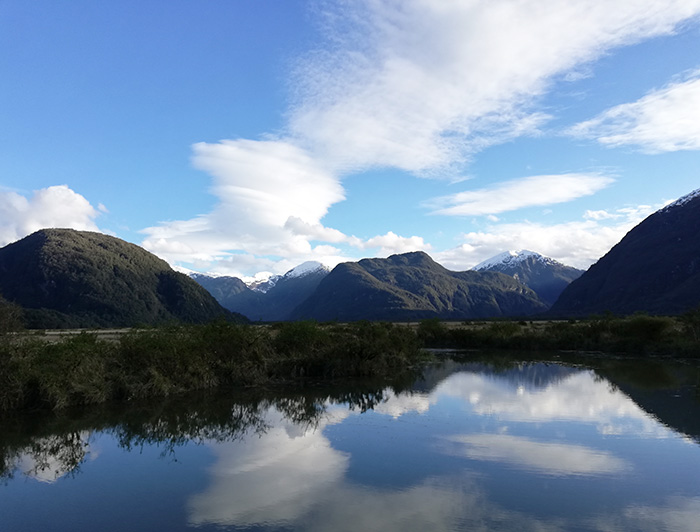
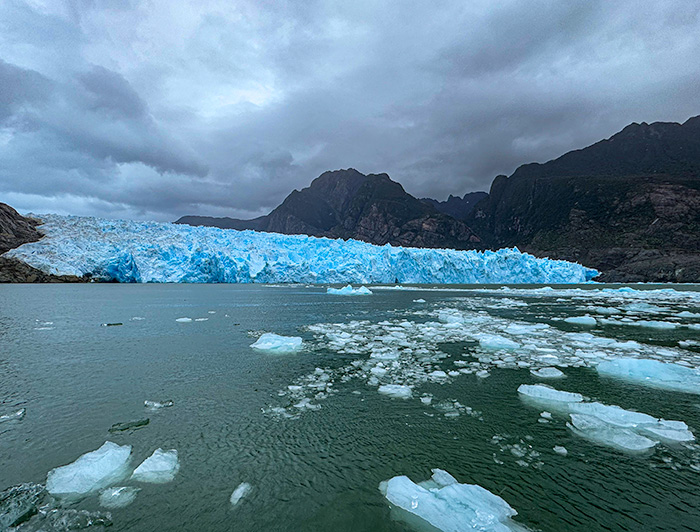
The concession is located on the edge of the Laguna San Rafael National Park and the Northern Patagonian Ice Field—at the end of Route X-728, which can be accessed from the Carretera Austral—and it is renowned for its scenic beauty, with glaciers, mountains, lakes, and a dense vegetation of coihue, lenga, and ñirre trees, among other native species. The road ends at a pier, where the journey continues by boat through glacial waters and a landscape that evokes the feeling of being in the depths of Patagonia, until reaching the northern bank of the Exploradores River delta.
Upon disembarking, a 500-meter wooden walkway is the welcome to UC Chile Patagonia Station. The refuge is built on three levels, has a platform to house domes, and is equipped with a photovoltaic system for generating electricity, allowing it to host students and researchers in conditions that enable their fieldwork.
As explained by Alejandro Salazar, faculty member from UC Chile Institute of Geography and Director of UC Chile Patagonia Station, “this is a research platform that enables interdisciplinary work and teaching excellence in the field. Its location makes it possible to collect environmental and territorial data in a system of fjords, forests, and marine environments, where it is possible to directly observe processes associated with the interaction between natural dynamics and anthropic activities in low intervention contexts.”
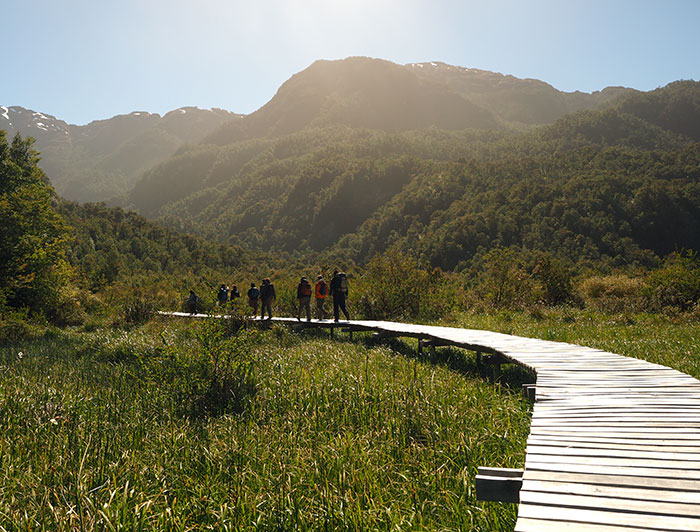
For this reason, the Station has become a meeting point for national and international researchers and undergraduate and postgraduate students from various disciplines. This environment is tremendously conducive to generating new research questions, perspectives, and interdisciplinary connections.
As told by Rodrigo de la Iglesia, Professor from the Faculty of Biological Sciences, the Station “provides us with a platform for observing changes in the overall biodiversity associated with increased human activity. The station is located in an area which is increasingly being used for human activity—not only aquaculture, but also tourism and its related issues.” He adds that “it is also a great environment for teaching students, not only critical thinking while preparing projects, but also practical thinking when taking and executing decisions, decisions that are sometimes not easy when working in extremely remote environments, with variable climates or weather conditions.”
In the fields of training and teaching, research has been promoted from the undergraduate level onward, incorporating the Undergraduate Research Competition (IPRE, as per its initials in Spanish), promoted by the Office of Research, which encourages student participation in research projects in all areas of knowledge or artistic creation. This has also been an important platform for postgraduate students, both master’s and doctoral.
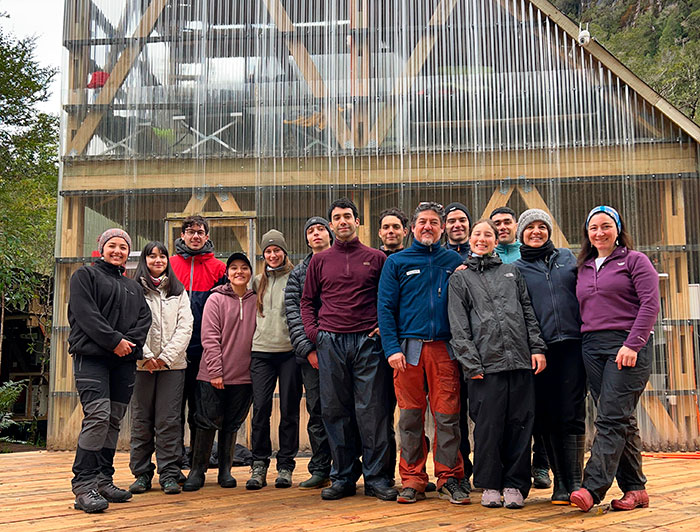
As engineering student Pedro Pablo Zavala explains, “Working with Patagonia Station this year has significantly broadened my perspective on how computing and the data science tools that I have been learning about in my undergraduate program can be integrated effectively to generate value in various disciplines. My experience as researcher within the team has been highly beneficial, both personally and professionally. This experience allowed me to deepen my knowledge through interdisciplinary work and strengthen my learning through practical application. I deeply value the time I have spent as part of the team, as it has reinforced my decision and motivation to continue improving in the field of data management.”
From her part, UC Chile Director of Research, María Elena Boisier, highlights: “UC Chile Patagonia Station has established itself as a strategic platform for interdisciplinary research and long-term environmental monitoring in one of the country’s most important and fragile territories. As part of the UC Chile Network of Regional Centers and Stations, promoted by the Office of Research, its work has generated valuable, locally relevant scientific knowledge about southern ecosystems. We are deeply proud to continue strengthening this network and the scientific commitment it represents, providing key evidence to understand the effects of global change and to promoting excellence in research from Patagonia.
Areas of research
Currently, four main areas of research are being developed at the Station. The first is “Territorial and environmental dynamics and legacies”, which focuses on studying how social processes and human activities interact with the environment, examining aspects such as environmental history, land use, sustainable tourism, productive activities, and territorial governance.
The second axis, “Environmental and global change and glaciology,” seeks to understand the historical changes that have occurred in Patagonia’s ecosystems, allowing for an evaluation of how natural dynamics and human factors have influenced these environments over time. It covers areas of study that include the ecology of marine and terrestrial environments, geomorphology, glaciology, climatology, paleoecology, paleoclimatology, and dendrochronology, among other related fields.
The third, “Dynamics and disruptions of biodiversity,” focuses on studying the changes and adaptations that happen in communities of microorganisms, arthropods and other organisms in response to environmental disruptions in various ecosystems, both marine and terrestrial.
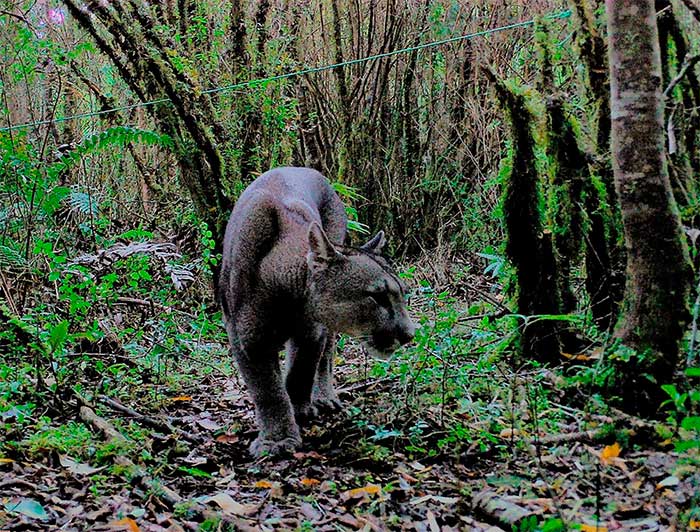
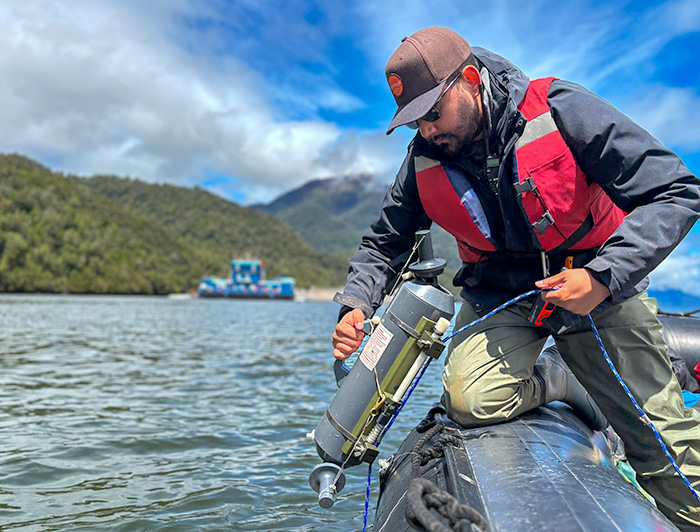
Within this theme, for example, is the work of Professor Rodrigo de la Iglesia. “We created a database of baseline information, for both physical and chemical parameters of the water column in the fjords surrounding the station, as well as profiles of microorganisms from the point of view of their biological diversity and their abundance,” he explains. He has also studied the more direct effect of human activities, associated with the imbalance of nutrients and presence of antibiotic resistance related to salmon farming.
The last line of research is “Bio-Socio-Cultural Perspective: Biodiversity and Gender,” which aims to analyze how gender variables impact the production of scientific knowledge in the context of climate change and ecosystems. As told by Claudia Matus, Director of the Center for Educational Justice and researcher at UC Chile Patagonia Station: “From gender as an epistemological lens, I explore what assumptions influence what is observed, how it is classified, and what is considered evidence, and how those local decisions are projected onto global databases. The central question is: What consequences does it have for environmental knowledge that data is generated in such specific and demanding contexts?”
Global network
An international milestone for UC Chile Patagonia Station is its connection to the French National Centre for Scientific Research (CNRS as per its initials in French) through the Institute of Ecology and Environment (INEE, as per its initials in French), through interdisciplinary projects that study southern ecosystems, climate change, and socio-environmental dynamics.
In 2018, UC Chile Patagonia Station became the first Latin American Member of the Laboratory of Excellence (LabEX), DRIIHM (Dispositif de Recherche Interdisciplinaire sur les Interactions Hommes-Milieux) of the INEE–CNRS (France), joining the Network of Human-Environment Obervatories (OHM), with the collective creation of the International Human-Environment Observatory (OHMi) Patagonia-Bahía Exploradores, to study the interaction between humans and the environment, providing and accessing a global data platform.
This partnership has enabled integration into an international research network, participation in activities of the network, hosting researchers, and participating in global projects, which has made it possible to offer projects with funding opportunities for UC Chile students and academics.
As underscored by Julien Cucherrouset, researcher from CNRW and the Center for Research in Biodiversity and the Environment (CRBE) of University of Toulouse, “our collaboration with UC Chile Patagonia Station offers a unique opportunity to develop interdisciplinary and international research. It is part of our research on the interactions between humans and the environment within the observatories of human environments (OHMi Patagonia-Bahía Exploradores). The remote location of the study area and of UC Chile Patagonia Station is associated with unique land, marine, and freshwater ecosystems, as well as with high levels of ecological conservation. Recently, rapid changes have taken place, with the development of a communication medium that has led to the acceleration, intensification, and spatial expansion of tourism and productive economy in the area. Understanding the socio-ecological consequences of these changes is crucial.”
Integrated into the community
Despite its remote location, the UC Chile Patagonia Station has sought from early on to establish ties with its closest neighbor: Puerto Río Tranquilo, a small town of around 500 people located on the shores of the General Carrera Lake.
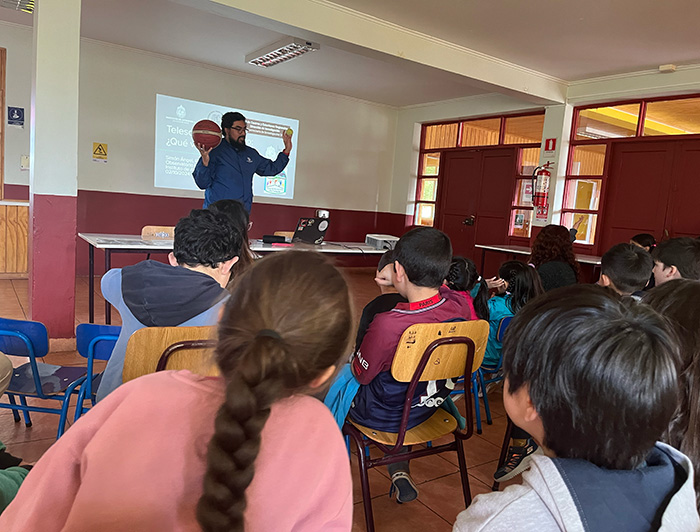
“The station’s contribution is not limited exclusively to the research on the territory,” stated Raquel Godoy, local link to the UC Chile Patagonia Station. “There is an ongoing commitment to the people and their children, promoting actions that strengthen the link between science and community. In collaboration with the UC Chile Futuro Library, the UC Chile Educational Justice Center, the Institute of Astrophysics and their researchers, we have contributed to the neighboring educational communities, with libraries, workshops for teachers and students, and various initiatives that seek to bring scientific knowledge closer to the people, expanding educational and cultural opportunities in the area.”
Achievements, challenges, and projections
“The tenth anniversary of UC Chile Patagonia Station, hosted by the Institute of Geography, is of special significance for our faculty,” stated Valeria Palanza, Dean of the Faculty of History, Geography, and Political Science. She adds: “It highlights the effort made to extend the scope of our research to the most remote places of Chile. The station enables us to connect, from the Chilean Patagonia, with interdisciplinary and global research and teaching agendas, enabling researchers from around the world to come to these latitudes. The work conducted by Professor Salazar, Director of the Station, is remarkable. Not only was he present at the origins of the Patagonia Station, but also has promoted it to the next stage of its development, networked with the other UC Chile stations, and connected to stations located along the Americas and with France through the CNRS.”
From his part, Alejandro Salazar notes that “the Station has operated as a space for the development of research, training, teaching and environmental monitoring, bringing together teams from different faculties and lines of work. There is progress in the generation of long-term environmental records, in the development of field training experiences for undergraduate and graduate students, and in the consolidation of scientific cooperation networks at a national and international level.”
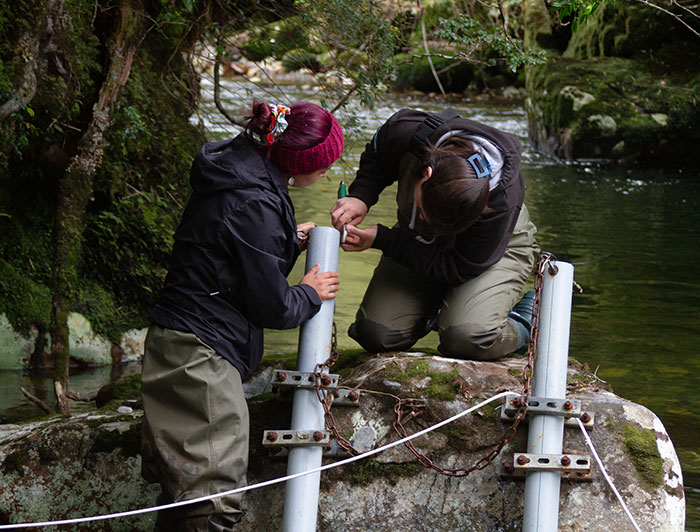
In recent years, the development of FONDECYT projects and international collaborations has been particularly promoted. The partnership with INEE-CNRS has been strengthened to address environmental and social challenges in southern ecosystems, and an integrated long-term monitoring data management system is being implemented, with the support of the Data Science Initiative (IMC UC, as per its initials in Spanish.)
Changes are a key challenge, both local as well at a global level. As Julien Cucherousset mentions, “social and environmental changes are accelerating worldwide, especially at the northernmost and southernmost areas of the planet. Exploradores Bay and UC Chile Patagonia Station will face challenging dynamics in the near future, and assessing the responses of these socio-ecological systems will require long-term environmental monitoring, innovative research, and associated infrastructure. We hope to continue this research with the UC Chile Patagonia Station to provide a long-term assessment of the consequences of these changes.”


