Green Hydrogen Could Reach Homes Thanks to Activated Carbon, According to UC Chile Research
One of the major barriers to the widespread adoption of this renewable resource is how to store and transport it. A single kilogram of hydrogen gas at atmospheric pressure produces three times more energy than one kilogram of gasoline—yet its volume is 8,000 times greater.
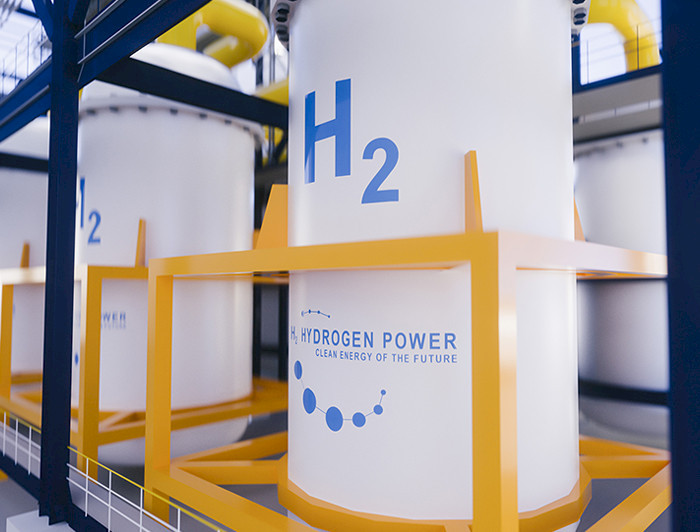
photo_camera To address this challenge, researchers are designing a storage tank capable of dissipating the heat generated during adsorption, allowing the activated carbon to retain its hydrogen storage capacity effectively. Phoro: UC Chile Engineering.
A research team from the UC Chile Department of Chemical and Bioprocess Engineering, led by Elodie Blanco and Felipe Huerta, is developing an innovative solution that could enable the safe and cost-effective storage and transportation of green hydrogen.
According to findings published on ING Divulga, the School of Engineering’s new science and technology outreach platform, one of the main obstacles to scaling up this renewable energy source is storage and transport. A single kilogram of hydrogen gas at atmospheric pressure produces three times more energy than one kilogram of gasoline—yet its volume is 8,000 times greater.
"Currently, hydrogen is mainly stored in high-pressure tanks, which are expensive and difficult to scale. That’s why we’re exploring a more affordable and safer alternative: tanks filled with activated carbon—a material obtained from carbonized waste from the forestry and agricultural industries,” explained Felipe Huerta.
The UC Chile engineering professor noted that this carbon is highly porous and capable of holding hydrogen on its surface through a process known as adsorption, allowing large amounts of gas to be stored. Moreover, it's low-cost and readily available, making it a viable solution for large-scale applications.
“However, this technology also presents challenges. Adsorption generates heat inside the tank, raising its temperature and increasing the pressure of the hydrogen that hasn’t yet been adsorbed—this reduces the process’s overall efficiency,” he added.
To address this challenge, researchers are designing a storage tank capable of dissipating the heat generated during adsorption, allowing the activated carbon to retain its hydrogen storage capacity effectively.
“One of the most innovative features of this design is the inclusion of extended surfaces, which increase the contact area between the tank and the outside environment, improving heat transfer. This would facilitate, for example, its transport by trucks,” said Huerta.
For the researchers, optimizing this system could mark a key step toward positioning green hydrogen as a viable alternative to fossil fuels, paving the way for its use in vehicles and homes.
The mathematical model supporting the tank design, along with a prototype currently under development, shows promising results. Tests have shown that tanks filled with activated carbon are more cost-effective and efficient than traditional high-pressure systems.
Green hydrogen is emerging as a promising option for combating climate change. Thanks to its geography and strong capacity for solar and wind energy generation, Chile has significant potential to become a global leader in green hydrogen production.
This resource is produced through electrolysis—a process that splits water into hydrogen and oxygen using electricity from renewable sources. The resulting hydrogen can then be stored and transported as a clean energy source.


