
Students from China and Latin America Develop Projects to Tackle Poverty
More than 120 Chilean students spent months collaborating with peers from China and Latin America to design innovative projects aimed at addressing multidimensional poverty. The international competition merges academic excellence with social commitment, presenting solutions that range from solar-powered lighting for rural homes to modular emergency shelters.
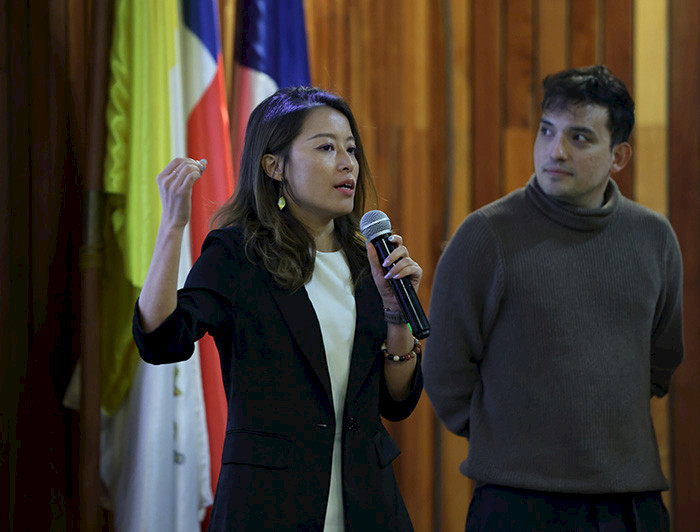
photo_camera After months of preparation, six teams made it to the final round and presented their projects to a panel of judges at the UC Innovation Center. (Photo credit: César Dellepiane)
According to the United Nations and the World Bank, roughly 808 million people—around 9.9% of the global population—live in extreme poverty. Without accelerated efforts, 8.9% are still projected to remain in this condition by 2030.
In response to this urgent challenge, the China-Latam Youth Challenge to Alleviate Poverty was launched by Tsinghua University in collaboration with partner universities across Latin America. The program encourages young people to design projects that address global poverty while fostering cross-cultural understanding, collaboration, and creative problem-solving—transforming these skills into meaningful impact.

“This initiative fosters a sense of community and service among participants, encouraging action and inspiring universities to link academic excellence with tangible social impact in Chile and beyond,” emphasizes Maria Montt Strabucchi, Vice President of International Affairs.
Tsinghua University Latin America Center, in collaboration with Pontificia Universidad Católica de Chile, Universidad de Chile, Universidad del Pacífico (Perú) and Universidade Federal do Rio de Janeiro (Brazil). The event also received support from various industry sponsors.
This year, more than 120 Chilean university students teamed up with peers from Tsinghua University and other partner institutions, working since March to develop solutions aligned with the UN’s call to end poverty.
From August 20–22, the six finalist teams presented their proposals to a panel of judges comprising experts from Tsinghua University, Pontificia Universidad Católica de Chile, Universidad de Chile, and Chile’s Ministry of Social Development and Family.
A Multidimensional Approach
Since its launch in 2024, the challenge has brought together more than 200 students from Chile and China, using innovation and technology to address poverty from a multidimensional perspective.
In line with the program’s mission, the teams developed projects targeting a broad range of issues—including unemployment, education, housing, access to clean environments and services, health, and civic engagement—viewed through both global and local lenses.
The final round marked the culmination of months of work, including workshops, mentorship sessions, and talks that helped students turn initial ideas into viable, sustainable projects.
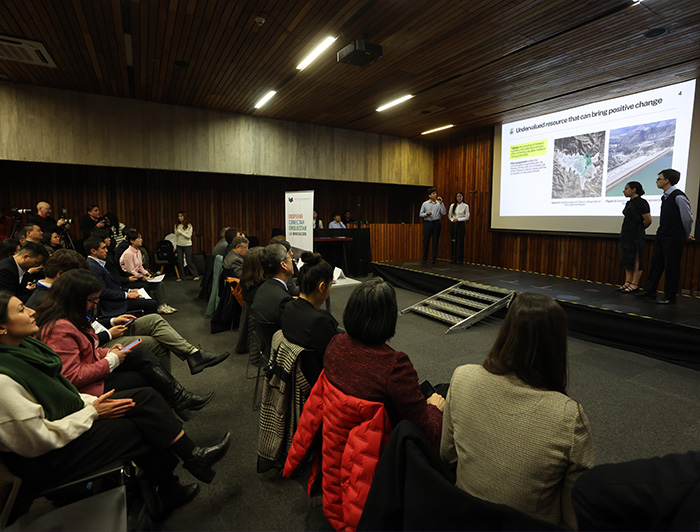
The Gold Award went to Fuente de Sueños Resplandecientes (微光筑梦), a project that proposed a three-pronged solution focused on community service, clean energy, and financing. The initiative installs lighting systems powered by renewable energy in remote rural areas that lack electricity.
Drawing inspiration from China's rural electrification initiatives, the team adapted the model to meet the specific needs of underserved Chilean communities.
Francisca Burgos, an International Studies student at Universidad de Chile and member of the winning team, highlighted the importance of speaking with people from other parts of the world to propose solutions as she reflected on the experience. “Outside of Santiago, and beyond Chile, there’s enormous potential for ideas that empower communities to solve these challenges.”
Diego Urzúa, a UC Chile Psychology graduate student, developed together with his team Elquilabs—a toolkit and digital platform that transforms rural spaces into hands-on Maker Spaces for learning and innovation.
His project aims to close the educational and creativity gap between rural and urban areas, encouraging innovation and the development of new knowledge from the local to the global level. “Bringing together different perspectives—like those from Chile, China, and Brazil—adds real value to the process,” Urzúa notes.
Yannie, an Economics and Finance student from Tsinghua University, participated in Resilio, which proposes modular emergency shelters made from foldable, reusable materials. This was her first visit to Chile. “Being part of this challenge has been an amazing opportunity to collaborate with peers from other cultures,” said the student.
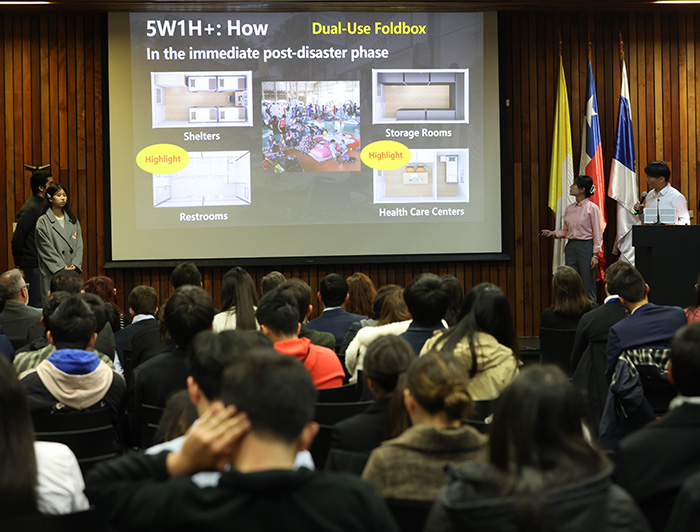
The Audience Choice Award went to Minova, a collaboration between students from Tsinghua University, Universidad de Santiago de Chile, and Pontificia Universidad Católica de Chile. Their project repurposes mining waste to produce sustainable and affordable construction materials.
Global Academic Collaboration in Action
The competition brought together students from multiple institutions who shared ideas, experiences, and concerns that ultimately evolved into practical, actionable projects. After three rounds of review and development, six finalists were selected:
- Elquilab
- Resilio
- Pega paga bien
- Pacíficos Peruanos
- Fuente de Sueños Resplandecientes (微光筑梦)
- Minova
The final round kicked off at Universidad de Chile, where the teams met in person with mentors and industry professionals for the first time. Participants also visited the Municipality of Lo Espejo, where they learned about local initiatives aimed at improving residents’ quality of life.
On August 21, students gathered at UC Chile’s San Joaquín Campus for an academic seminar on the China-Latam Youth Challenge to Alleviate Poverty, featuring faculty from Tsinghua University and UC Chile.
One of the two standout panels was led by Gabriela Arriagada, from UC Chile’s Institute of Applied Ethics and the Institute of Mathematical and Computational Engineering, who explored how artificial intelligence can be used to fight poverty.
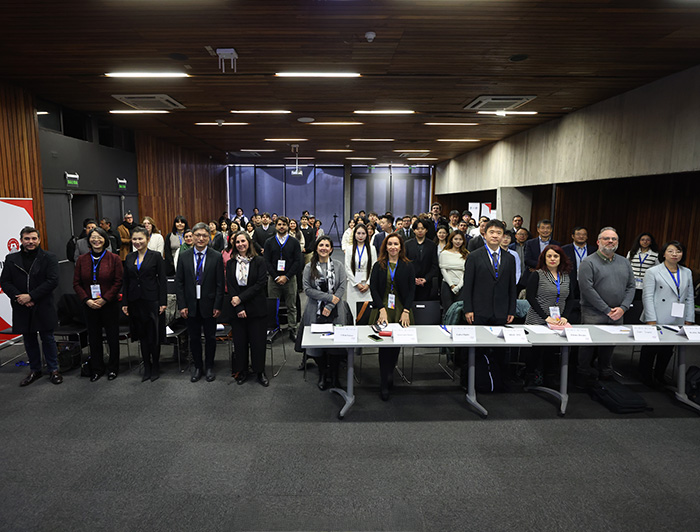
The teams then convened at UC Innovation Center for the final presentations, where university leaders, corporate sponsors, and Chilean government representatives gathered to support the student-led proposals.
Looking ahead, the finalists will travel to Tsinghua University in January 2026 to continue developing their projects, receive advanced training, and build networks that could lead to long-term international partnerships.
These initiatives show how collaboration between young leaders from China and Latin America can turn ideas into real-world solutions for some of the most pressing global challenges.


